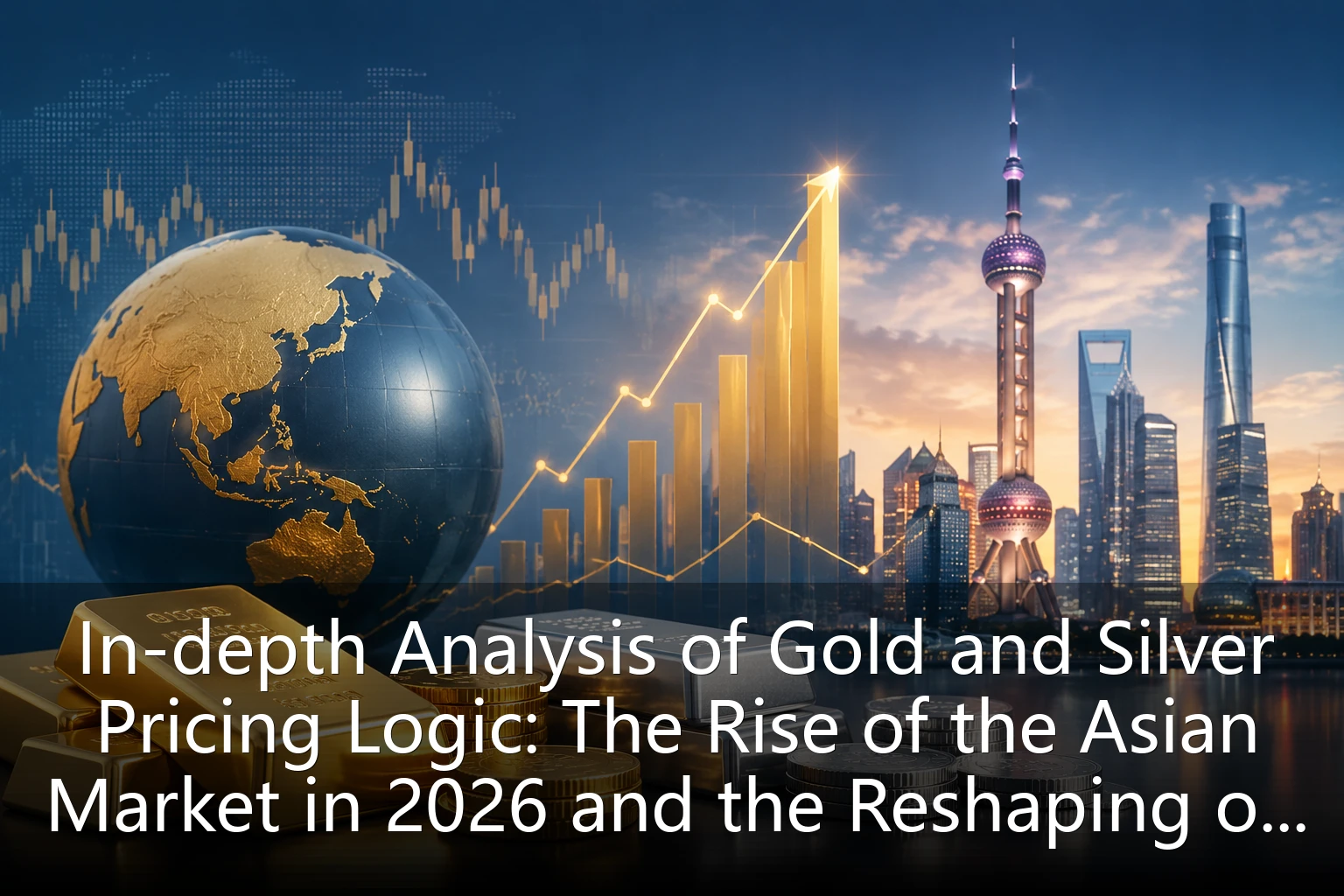
In 2026, the global precious metals market is undergoing a profound reshaping of its pricing logic. As the Asian central bank gold purchase boom accelerates, the Federal Reserve's interest rate policy shifts, and geopolitical risks escalate, gold and silver prices are no longer dominated by traditional factors alone but present a new landscape driven by multiple complex factors. This article will conduct an in-depth analysis of the evolution of the current gold and silver pricing logic from three dimensions: core pricing factors, the rise of the Asian market, and changes in the global landscape, providing key perspectives for investors to seize precious metals investment opportunities.
I. Core Drivers of Gold and Silver Pricing Logic: From Single to Multiple
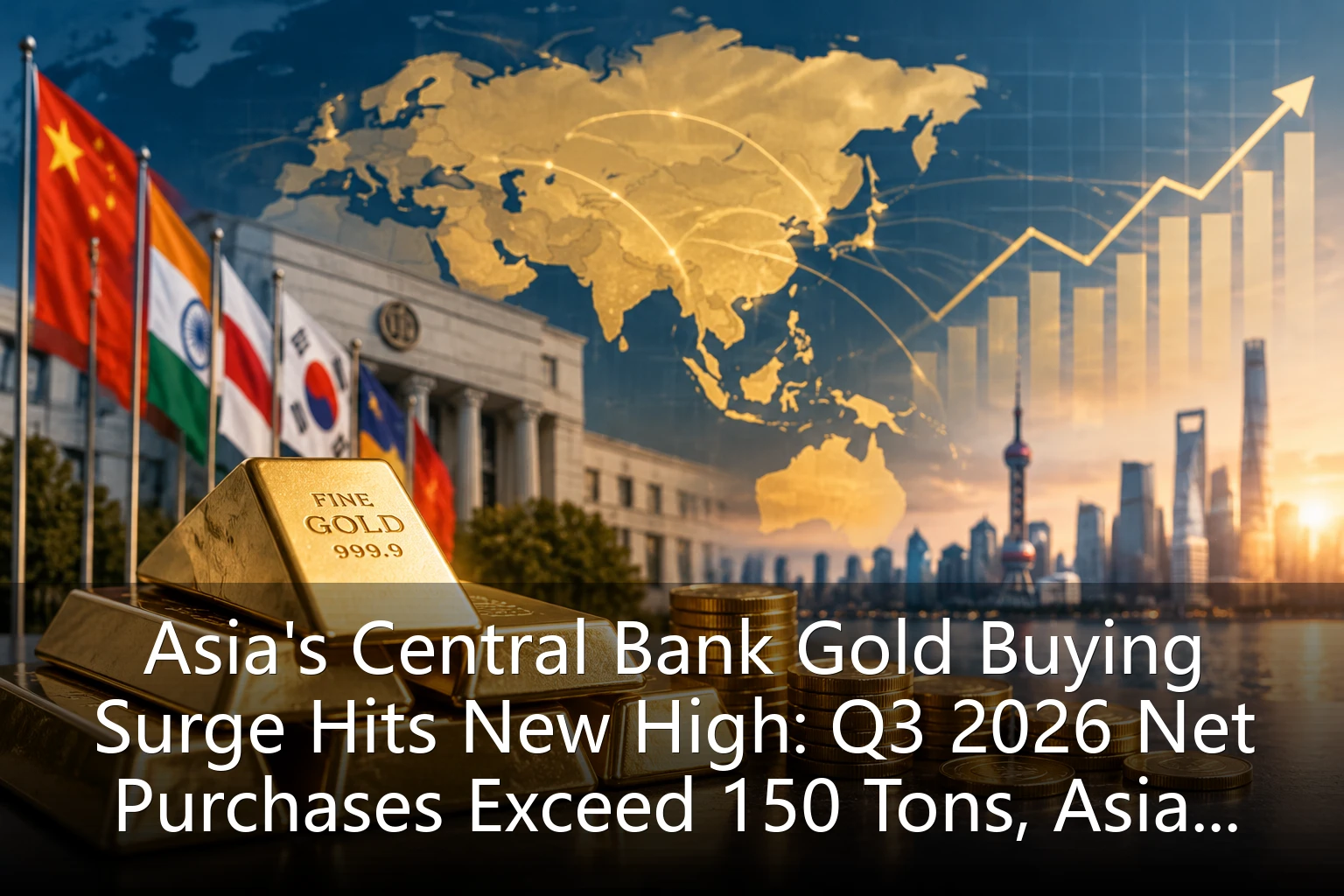
Traditionally, gold and silver pricing were mainly influenced by the US Dollar Index, the Federal Reserve's interest rate policy, and geopolitical risk aversion. However, 2026 market data shows this logic is being broken. The Federal Reserve's decision to keep interest rates unchanged in Q3 2026 did not suppress gold prices as expected; instead, rising inflation expectations and a weakening dollar pushed gold to break through the $4300 mark. Behind this is the continuous heating up of the global central bank gold purchase boom—global central banks net purchased over 150 tons of gold in Q3 2026, with Asian demand accounting for over 65% for the first time, becoming a key driver of the shift in pricing power.
The trend of the US Dollar Index also confirms this change. In September 2026, the US Dollar Index fell below the 98 mark, hitting a three-year low, mainly due to weak US economic data and the demand for Asian currency anchor reset. Analysts point out that the depreciation of the dollar not only reduces the dollar-denominated cost of gold but also strengthens gold's function as a safe-haven asset. Meanwhile, the interweaving of geopolitical risk aversion (such as tensions in the Strait of Hormuz) and industrial demand (such as silver's application in the hydrogen energy sector) further complicates the volatility logic of the gold-silver ratio.
1. Federal Reserve Interest Rate Policy: From Suppression to Neutrality
In 2026, the Federal Reserve ended a year-long rate hike cycle and instead maintained interest rates in the 5.25%-5.5% range. This policy shift has a differentiated impact on the gold and silver markets: on one hand, the suppressive effect of a high-interest-rate environment on gold weakens, especially when inflation expectations remain above target levels, highlighting gold's value preservation function; on the other hand, stable interest rates provide bottom support for gold and silver prices. The market expects that if the Federal Reserve starts cutting rates in 2027, gold and silver prices may rise further.
2. Global Central Bank Gold Purchases: Asia Leads Strategic Transformation
The global central bank gold purchase boom reached a five-year high in 2026, with a net increase of over 150 tons. Among them, Asian central banks performed particularly well: the People's Bank of China increased gold holdings for 21 consecutive months, with a single-month increase of 640,000 ounces in July; the Bank of Korea resumed gold purchases after 13 years, increasing its reserves to 104 tons. This trend not only reflects the strategic awakening of the de-dollarization 2.0 era but also directly affects the global gold supply-demand balance through physical demand. The gold purchase behavior of Asian central banks is reshaping the geographical focus of gold pricing, shifting from the West to the East.
3. Geopolitical Risk Aversion and Industrial Demand: Dual Cycles Overlapping
Geopolitical risks (such as the Middle East situation, the continuation of the Russia-Ukraine conflict) continue to boost safe-haven demand, while silver's industrial attributes (such as in the photovoltaic and hydrogen energy sectors) provide additional support for its price. In 2026, the gold-silver ratio fell below the 55 mark, hitting a historical low, indicating that the爆发 of silver's industrial demand is reshaping the precious metals ratio logic. This differentiation suggests that the investment logic of gold and silver has shown significant differences.
II. The Rise of the Asian Market: The Key Force for the Eastward Shift of Pricing Power
The rise of the Asian market is the core of the reshaping of gold and silver pricing logic in 2026. From central bank gold purchases to the performance of gold mining companies, to the enhancement of Shanghai Gold's pricing power, Asia is transforming from a participant in the global precious metals market to a rule-maker.
1. Asian Central Bank Gold Purchase Boom: Reserve Share Breaks Historical Peak
The share of Asian central banks' gold reserves has broken through the historical peak, reaching 35%, far exceeding 20% in 2010. This change not only alters the geographical distribution of global gold reserves but also indirectly affects prices by influencing the capital flow of international gold ETFs (such as Asian gold ETFs absorbing 6 billion in 16 consecutive days). Analysts believe that the gold purchase behavior of Asian central banks has strategic continuity and may become a major supporting factor for gold prices in the next few years.
2. Asian Gold Mining Companies: Performance Differentiation and Investment Opportunities
In 2026, the performance of Asian gold mining companies showed significant differentiation. Zijin Mining's net profit increased by 35%, Chifeng Gold's mid-term report forecasted an increase of over 80%, while some companies faced pressure due to rising costs. Behind this differentiation is the change in the mineral supply-demand pattern: the share of Asian gold mine production increased to 28%, and the Shanghai Gold premium hit a historical high, reflecting the井喷 of Asian physical gold demand. Investors need to focus on gold mining companies with resource advantages and cost control capabilities, such as Zijin Mining and Chifeng Gold.
3. Shanghai Gold's Pricing Power: From Regional to Global
The pricing influence of the Shanghai Gold Exchange continues to expand, with its trading volume accounting for 18% of the global total in 2026, doubling compared to 2020. The rise of Shanghai Gold marks the enhancement of Asia's voice in precious metals pricing, and a tripartite pattern of "London Gold - New York Gold - Shanghai Gold" may form in the future. This change provides Asian investors with a pricing reference closer to the local market and new opportunities for global capital to deploy in the Asian precious metals market.
III. Reshaping of the Global Landscape: De-dollarization and a New Stage of the Precious Metals Cycle
The gold and silver market in 2026 is essentially the result of the superposition of the de-dollarization trend and the changes in the precious metals cycle. The weakening of the dollar's hegemony, the rise of the Asian economy, and the green energy transition jointly promote the long-term reconstruction of the precious metals market.
1. De-dollarization 2.0: Currency Anchor Reset
Many countries around the world are accelerating the de-dollarization process, including increasing gold reserves, promoting local currency settlement, and developing digital currencies. This trend reduces the status of the dollar as a global reserve currency and strengthens gold's monetary attribute. Analysts predict that in the next five years, the share of gold in global reserves may rise from the current 15% to 20%, becoming an important tool for de-dollarization.
2. Precious Metals Cycle: From Inflation Hedging to Strategic Assets
The precious metals cycle is transforming from a traditional inflation hedging tool to the core of strategic asset allocation. In 2026, the allocation ratio of gold by global high-net-worth individuals and institutional investors rose to 12%, a ten-year high. This change stems from concerns about economic uncertainty and the pursuit of long-term value. For ordinary investors, gold ETFs and mining ADRs have become convenient allocation methods.
3. Investment Strategy Recommendations: Long-term Layout and Dynamic Adjustment
Based on the current pricing logic, investors should adopt the following strategies:
- Gold Allocation: Buy on dips, focus on Asian gold mining companies and gold ETFs, especially those benefiting from central bank gold purchases and the eastward shift of pricing power.
- Silver Allocation: Focus on silver ETFs and mining ADRs driven by industrial demand, such as Shengda Resources (net profit increased by 456% in half a year).
- Dynamic Adjustment: Closely monitor the Federal Reserve's interest rate decisions, the US Dollar Index, and geopolitical risks, and flexibly adjust positions.
Conclusion
The gold and silver pricing logic in 2026 has evolved from the traditional dollar-interest rate framework to a complex system driven by multiple factors. The rise of the Asian market, the global central bank gold purchase boom, and the de-dollarization trend are reshaping the landscape of the precious metals market. Investors need to break out of traditional thinking and focus on new variables such as the eastward shift of Asian pricing power, the performance differentiation of gold mining companies, and changes in industrial demand to seize opportunities in the future precious metals cycle. As the global landscape continues to evolve, the exploration of gold and silver pricing logic will remain a focal point of market attention.