Gold and Silver Futures Market Surges with Volatility: Record High Spot Premium, What Do Differing Institutional Positions Signal?
In August 2026, the global precious metals market experienced significant fluctuations, with gold and silver futures prices moving upward amid multiple factors, while the spread between spot and futures markets widened to historical levels, drawing widespread market attention. This phenomenon reflects the intertwined impact of multiple factors, including shifts in global monetary policy, surging physical demand in Asia, and escalating geopolitical risks.
Gold and Silver Price Trends Review: Futures Leading, Spot Following
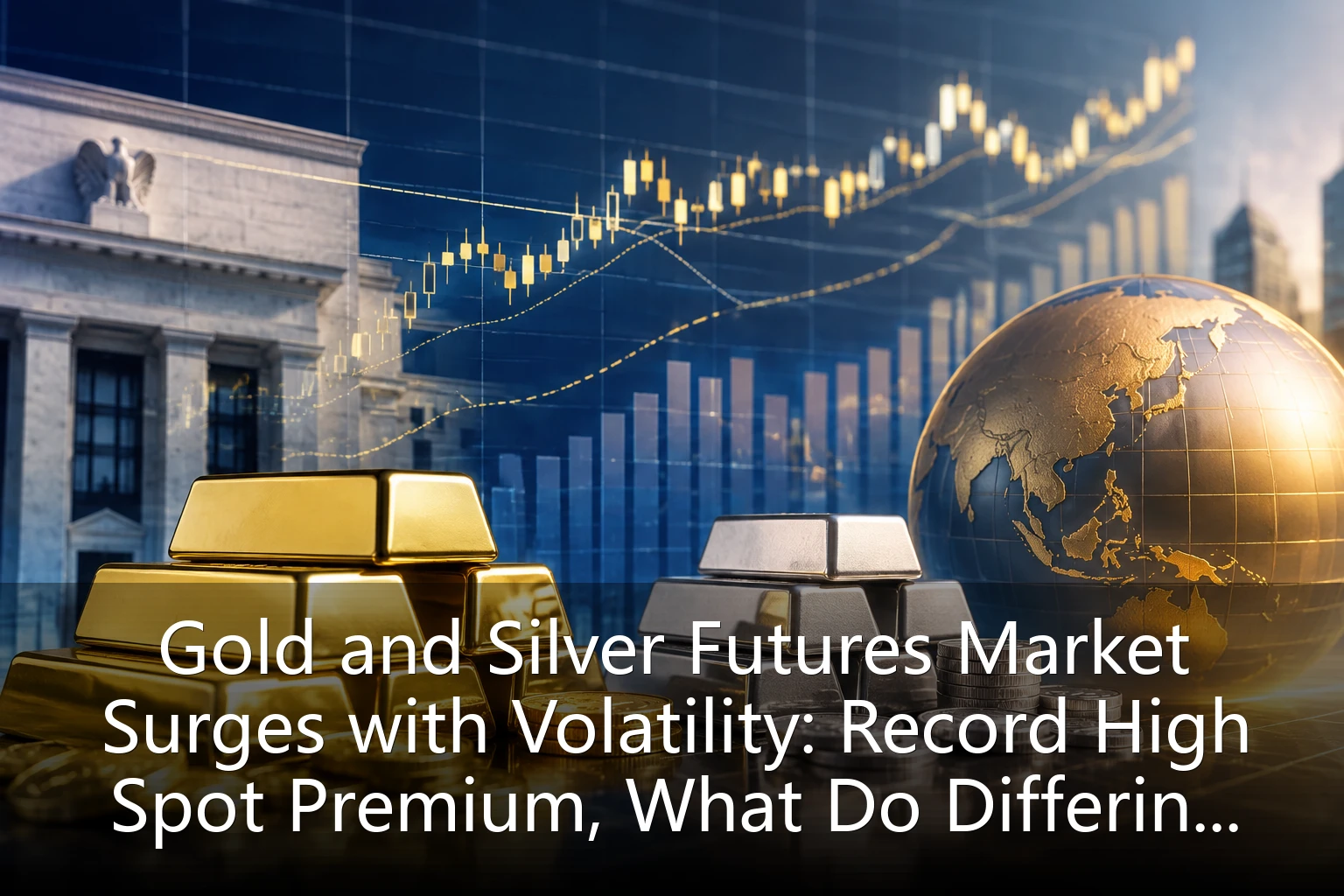
As of early August, international gold futures prices have risen for five consecutive weeks, breaking through the $4,300/oz mark, reaching a new high for the year. Meanwhile, silver futures prices have also followed upward, surpassing $30/oz, with a year-to-date increase of over 25%. Notably, the spread between spot and gold futures has continued to widen, with spot gold premiums on the Shanghai Gold Exchange reaching $15/oz at one point, a historic high.
This phenomenon of futures prices leading spot prices is typically seen as a signal of market optimism about future prices. The futures market reflects participants' expectations for future prices, while the spot market more closely reflects current supply and demand relationships. The current situation where futures prices are higher than spot prices indicates that the market expects further upside potential for gold prices.
Reasons Behind Record High Spot Premiums
The historic high in spot gold premiums has been driven by several key factors:
- Surging Physical Demand in Asia: Physical demand in major gold-consuming countries in Asia, such as India and China, has significantly increased during the traditional summer consumption season. The arrival of India's wedding season and Chinese consumers' renewed recognition of gold's safe-haven attributes have driven a buying boom for physical gold.
- Supply Chain Constraints: The global gold supply chain has not fully recovered from the pandemic impacts of recent years. Persistent power supply issues in major gold-producing countries like South Africa have affected gold production, leading to supply constraints.
- Continuous Gold Purchases by Asian Central Banks: Many Asian central banks continue to increase their gold reserves to diversify foreign exchange holdings. These central banks typically prefer purchasing physical gold, further boosting spot gold demand.
Divergence in Institutional Positions: Intensified Bull-Bear Battle
Institutional position data in the gold and silver futures markets shows clear divergence, reflecting differing views on future market direction. According to the latest report, net long positions in gold futures increased by 12% over the past month, while net long positions in silver futures decreased by 8%.
This divergence primarily stems from different assessments of the two precious metals. Gold is viewed as a traditional safe-haven asset, favored amid increasing economic uncertainty, while silver also has industrial properties, with investors concerned about industrial demand leading to reduced positions.
Changes in positions at large hedge funds have been particularly noteworthy. Some macro hedge funds have significantly increased their long positions in gold futures, believing that the Fed is about to end its rate hike cycle and that gold will enter a new upward phase. Meanwhile, some fundamental-focused funds have reduced their silver futures positions, worrying that slower growth in the photovoltaic industry might affect silver's industrial demand.
Analysis of Market Drivers
Expectations of Fed Policy Shift
One of the main drivers of current gold and silver price increases is market expectations of a shift in Fed monetary policy. Although Fed officials have recently emphasized inflationary pressures, increasing economic data shows inflation is gradually easing. The market widely expects the Fed to begin cutting rates in Q4 2026, an expectation that has driven gold and silver prices higher.
Historical data shows that Fed rate cut cycles typically provide support for gold and silver prices. Declining real interest rates reduce the opportunity cost of holding gold and increase its appeal. Additionally, rate cuts are often accompanied by a weaker US dollar, and since gold and silver typically have an inverse relationship with the dollar, this further pushes prices higher.
Escalating Geopolitical Risks
Recent tensions in the Middle East, with the security of the Strait of Hormuz as a critical global oil transport channel under threat, have increased geopolitical risks. This has enhanced gold's appeal as a safe-haven asset, prompting investors to buy gold futures as a hedging tool.
Beyond the Middle East, the ongoing Russia-Ukraine conflict has also had a profound impact on the global geopolitical landscape. These uncertainties have led investors to reassess asset allocations, increasing allocations to safe-haven assets like gold.
Continuous Gold Purchases by Global Central Banks
The trend of global central banks increasing gold purchases accelerated in 2026. According to the latest data from the World Gold Council, global central banks purchased a net 200 tons of gold in H1 2026, a 15% increase year-on-year. Asian central banks emerged as the main purchasers, accounting for over 60% of total purchases for the first time.
Behind central bank gold purchases are concerns about the safety of dollar assets and strategic needs for foreign exchange diversification. Particularly in some emerging markets, central bank gold purchases aim not only to diversify risks but also to reduce dependence on the dollar system.
Future Market Outlook and Investment Strategies
Short-term Trends: Volatile Upward Movement
In the short term, the gold and silver futures market may continue to show volatile upward movement. Expectations of Fed policy shifts, geopolitical risks, and support from Asian physical demand will provide backing for gold and silver prices. However, market volatility may also increase, especially during the release of key economic data and Fed official speeches.
From a technical perspective, gold futures prices face some resistance around the $4,300/oz level, but once this level is breached, the next target could be around $4,500/oz. Silver futures prices also encounter strong resistance at $30/oz, but a breakthrough could push prices toward $35/oz.
Medium-term Trends: Structural Opportunities
Looking at the medium term, the gold and silver markets may present structural opportunities. Gold is expected to maintain relative strength, benefiting from continuous central bank purchases and increasing safe-haven demand. Silver may benefit from the rapid development of the new energy industry, particularly the continued expansion of the photovoltaic sector, which supports industrial demand for silver.
Notably, the gold-silver ratio is currently at a historically low level, meaning silver is relatively undervalued compared to gold. Historical data shows that the gold-silver ratio typically reverts to its mean, which could provide silver with greater upside potential relative to gold.
Investment Strategy Recommendations
Based on current market conditions, we offer the following investment strategy recommendations:
- Allocation Recommendations: Investors may consider increasing the allocation of precious metals in their portfolios, maintaining a gold-to-silver ratio of approximately 3:1 to balance the effects of safe-haven attributes and industrial demand.
- Trading Strategies: For short-term traders, focus on technical signals in the futures market, buying at key support levels and taking profits at resistance levels. For medium to long-term investors, consider regular investments in precious metal ETFs or physical gold.
- Risk Management: Due to the high volatility of the precious metals market, investors should appropriately control position sizes, set stop-loss levels, and avoid excessive leverage.
Conclusion
The gold and silver futures market has shown volatile upward movement under the influence of multiple factors, with record high spot premiums reflecting market optimism about future prices. The divergence in institutional positions indicates differing views on future market direction, which may increase market volatility.
Looking ahead, Fed policy shifts, geopolitical risks, and global central bank gold purchases will continue to influence gold and silver price trends. Investors should closely monitor changes in these key factors and develop appropriate investment strategies based on their risk tolerance. Against the backdrop of increasing global economic uncertainty, precious metals, as traditional safe-haven assets, will continue to play an important role in investment portfolios.
Whether for short-term trading or long-term investment, understanding the driving factors and operational logic of the gold and silver markets is fundamental to making informed decisions. As the global economy continues to evolve, the precious metals market will also undergo continuous changes, requiring investors to remain vigilant and adjust strategies promptly to seize market opportunities.