In-depth Analysis of Gold and Silver Pricing Logic: The Rise of Asian Markets and the Reshaping of the Global Landscape in 2026
In the uncertain global economic environment of 2026, the precious metals market is undergoing a profound transformation in its pricing logic. As the status of Asian economies continues to rise within the global financial system, the pricing power of gold and silver is gradually shifting eastward from the traditional Western center. This shift not only influences the trends of the precious metals market but is also reshaping the global financial structure. This article will deeply analyze the driving factors behind this change from multiple dimensions and its significant implications for investors.
I. The Asian Central Bank Gold Buying Wave: Reshaping Gold Reserve Strategies
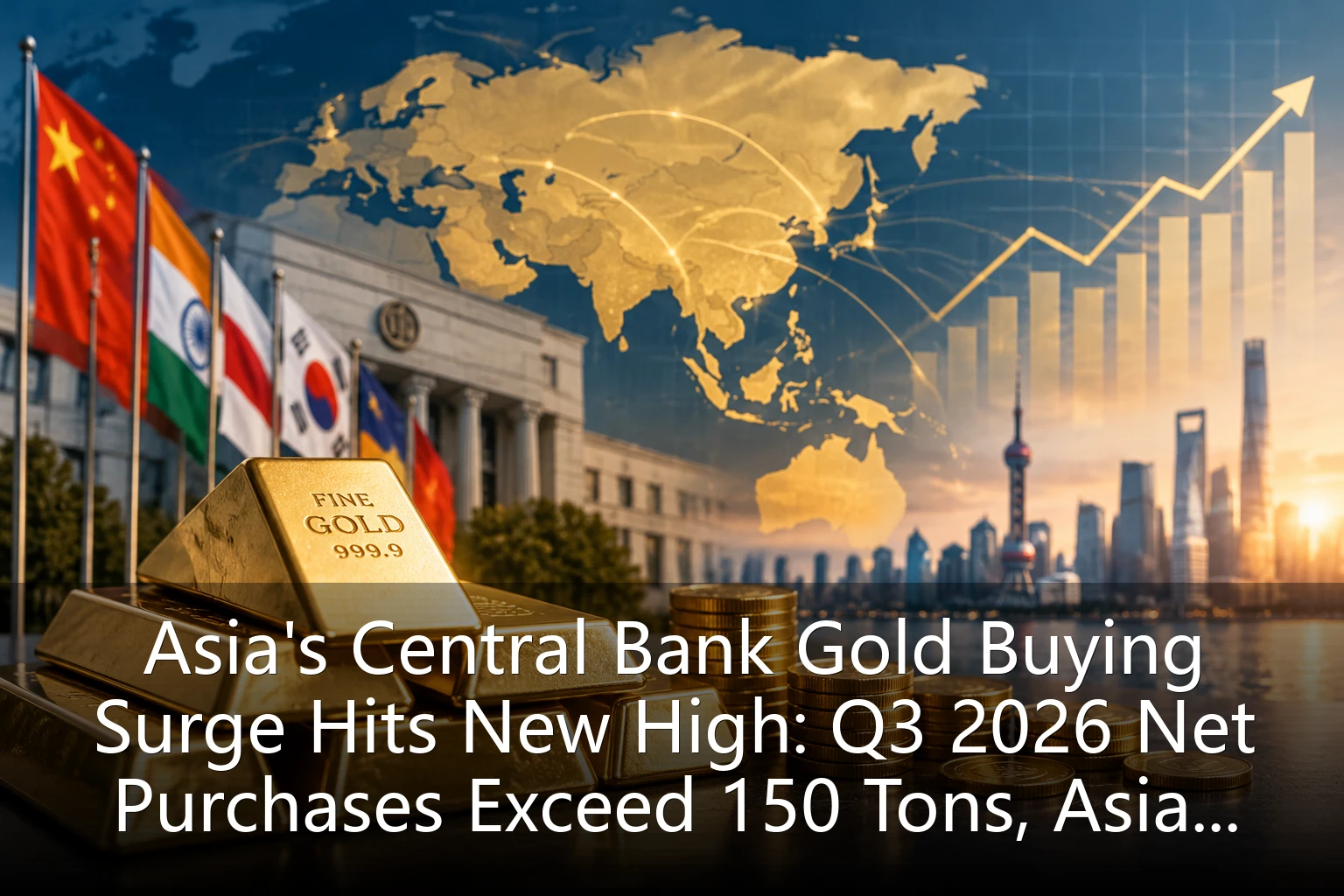
In 2026, the wave of gold purchases by Asian central banks reached a new high, becoming a key force driving changes in the global gold market structure. According to the latest data, Asian central banks net purchased over 150 tons of gold in the third quarter of 2026, for the first time exceeding the historical threshold of 65% of Asian demand. Behind this data is the reassessment of US dollar hegemony by central banks in Asian countries and the urgent need for diversified reserve asset allocation.
The People's Bank of China has continuously increased its gold holdings for 21 months, with a single-month increase of 640,000 ounces in July, demonstrating China's strategic positioning in the global gold market. Concurrently, the Bank of Korea resumed gold purchases after 13 years, adding 104 tons of gold reserves in one go, marking the completion of the final piece of the Asian central bank gold acquisition puzzle. These actions have not only changed the geographical distribution of global gold reserves but have also subtly influenced the gold pricing mechanism.
The gold purchasing strategies of Asian central banks exhibit several notable characteristics: first, the pace of purchasing is more flexible, moving beyond simply pursuing large, one-time increases to conducting phased operations based on market timing; second, the objectives of purchasing are more diversified, expanding from merely preserving reserve assets to enhancing strategic currency status; and finally, the transparency of purchases has improved, with some central banks beginning to disclose purchasing details, enhancing market expectations management regarding Asian gold demand.
II. The US Dollar Index and Gold and Silver Pricing: A New Equilibrium
The US Dollar Index, as a core factor influencing gold and silver prices, has shown different trends in 2026 compared to previous periods. In September 2026, the US Dollar Index fell below the 98 level, hitting a three-year low. This change resonated with the Asian central bank gold buying wave, jointly leading to the re-opening of the gold allocation window.
The weakening of the US Dollar Index is mainly due to several key factors: the turning point in the Federal Reserve's interest rate policy, the continuous expansion of the US fiscal deficit, and the global reassessment of US dollar credibility. In particular, the signal of interest rate cuts released by the Federal Reserve in the third quarter of 2026 led to a relative decrease in the attractiveness of US dollar assets, while the value of gold as a traditional safe-haven asset has once again been highlighted.
It is worth noting that the relationship between the US Dollar Index and gold prices is undergoing subtle changes. Traditionally, a weaker US dollar usually drives gold prices up, but in 2026, this relationship has become more complex. The rise of the Asian market means that gold pricing is no longer solely dependent on the US dollar trend but is influenced by a combination of multiple factors, including Asian physical demand, central bank purchasing strategies, and geopolitical risks.
III. Geopolitical Risks: A New Dimension of Risk Aversion
In 2026, geopolitical risks have become an important variable affecting gold and silver pricing. Tensions in the Strait of Hormuz, political instability in the Middle East, and strategic competition between major powers are continuously raising market risk aversion, thereby supporting the upward trend of gold prices.
Especially in August 2026, gold prices surged by 4% overnight to return to $4300, with the Hormuz agreement expected to be the fuse igniting the precious metals market. This event indicates that the impact of geopolitical risks on gold and silver prices is no longer limited to short-term fluctuations but may trigger long-term structural changes. The role of the Asian market in geopolitical risks is also changing. As the status of Asian economies in the global political and economic landscape is enhanced, the influence of Asian countries in geopolitical games is continuously increasing, making the Asian market more sensitive to geopolitical risks, while also providing a new perspective on gold and silver pricing. IV. Asian Mineral Supply and Demand: Support from Real Assets Changes in the supply and demand structure of Asian minerals provide a solid real asset foundation for gold and silver pricing. In 2026, the performance of Asian gold mining companies was fully released, with Zijin Mining's net profit growing by 35% and Chifeng Gold's interim report showing a growth of over 80%, demonstrating the strong growth momentum of the Asian gold mining industry. The rise of Asian gold mining companies has not only increased global gold supply but is also changing the layout of the gold industry chain. On the one hand, Asian gold mining companies have reduced production costs through technological innovation and scale expansion, leading to a more stable gold supply; on the other hand, Asian gold mining companies are increasingly participating in the global gold pricing process through various channels such as futures and spot markets, influencing price formation. At the same time, the demand for physical gold in Asia is also continuously growing. The Shanghai gold premium reached a historic high, and Asian gold ETFs absorbed 6 billion over 16 consecutive days, all indicating a strong demand for physical gold in the Asian market, providing solid support for gold and silver prices. V. Gold-Silver Ratio Logic: A New Equilibrium Point The gold-silver ratio, as an important indicator of the precious metals market, has shown new trends in 2026. The gold-silver ratio dropped below the 55 mark, and industrial demand for silver exploded, reshaping the precious metals ratio logic. This change is mainly due to several factors: first, the rapid growth of industrial demand for silver in fields such as new energy and electronics has made silver's industrial attributes more prominent; second, the complementary relationship between silver's financial attributes and gold's safe-haven attributes exhibits different characteristics during market fluctuations; finally, the growing demand for silver in the Asian market, especially silver consumption in countries like India and China, is changing the global supply and demand structure of silver. The change in the gold-silver ratio is significant for investors. Traditionally, the gold-silver ratio has been regarded as an important indicator for judging the trend of the precious metals market, but in 2026, this indicator needs to be analyzed comprehensively in conjunction with more factors, including changes in industrial demand, central bank gold purchasing strategies, and geopolitical risks. VI. Investment Strategies: Grasping New Opportunities in the Precious Metals Market Faced with the profound changes in the gold and silver pricing logic in 2026, investors need to adjust traditional investment strategies to adapt to the new market environment. First, pay attention to opportunities in the Asian market. The gold purchasing spree by Asian central banks, the performance growth of Asian gold mining companies, and the growth in Asian physical gold demand all provide new investment opportunities for investors. In particular, Asian gold stocks on US exchanges showed strong growth momentum in the second half of 2026, becoming a focus of investor attention. Second, diversify precious metal assets. Besides traditional gold investment, precious metals such as silver and platinum also exhibit different investment values. Investors should reasonably allocate different precious metal assets based on their risk appetite and market judgment to diversify risks and capture opportunities in different markets. Finally, focus on long-term trends rather than short-term fluctuations. The changes in the precious metals market in 2026 reflect long-term trends, and investors should avoid being distracted by short-term volatility, adhere to the philosophy of long-term investment, and seize new opportunities in the precious metals market. VII. Conclusion: Asia's Rise Reshaping the Global Gold and Silver Pricing Landscape The rise of Asian markets in 2026 is profoundly reshaping the global gold and silver pricing landscape. From central bank gold purchasing strategies to the movement of the Dollar Index, and from geopolitical risks to the supply and demand of Asian minerals, multiple factors are working together to fundamentally change the logic of gold and silver pricing. For investors, the importance of understanding this change is self-evident. Only by grasping the trend of Asia's rise in global gold and silver pricing can opportunities be seized and assets be preserved and increased in the precious metals market in 2026. In the future, as the status of Asian economies continues to rise in the global financial system, the Asian factors in gold and silver pricing will become more prominent, providing investors with richer investment opportunities and a broader market space.