
Asian Central Banks Set Record for Gold Buying, Global Reserve Currency Landscape Accelerates
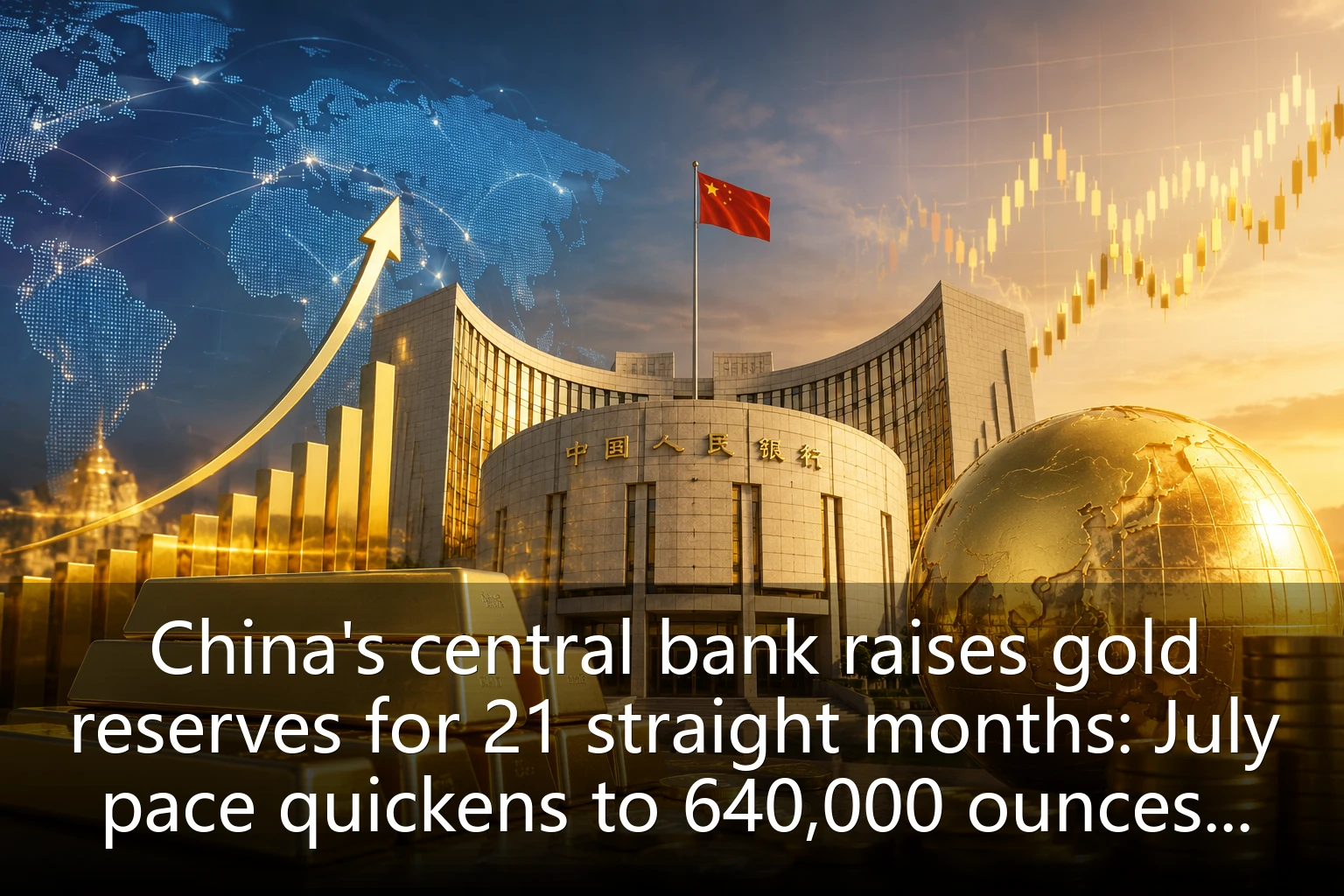
On July 28, 2026, the World Gold Council released data showing that global central banks net purchased 483 tons of gold in the first half of the year, up 22% year-on-year. Central banks in Asia accounted for over 60% of the increase: the People's Bank of China added reserves for the 18th consecutive month, surpassing 2,450 tons, a record high; the Reserve Bank of India bought 45 tons in Q2, the largest quarterly scale in five years; Kazakhstan, Uzbekistan, Indonesia, and others also continued buying.
De-dollarization and Financial Security: The Deep Logic Behind Central Bank Gold Buying
Multiple precious metals analysts point out that the core drivers of this wave of central bank gold buying are "de-dollarization" and "financial security." U.S. national debt has exceeded $45 trillion, challenging the dollar's credit system; the "weaponization" of Western financial sanctions against Russia has pushed emerging market countries to accelerate foreign reserve diversification. "Gold, as the ultimate asset with no sovereign credit risk, has become the preferred ballast for central banks," said Jeffrey Currie, head of commodities research at Goldman Sachs, in a recent report.
Asian Scenario: From "Dollar Dependence" to "Gold Autonomy"
Asian economies have increased their share in global trade, but risks in the dollar settlement system have been exposed. The People's Bank of China coordinates gold reserve increases with RMB internationalization: in Q2 2026, the share of RMB in cross-border payments rose to 8.3%, a record high; India used a discount window for gold imports to replenish reserves. Additionally, Southeast Asian countries (such as Thailand and the Philippines), due to geopolitical uncertainty, have raised the proportion of gold in foreign exchange reserves from 5% to over 15%.
Gold-Silver Pricing Logic Reshaped: From "Rate Sensitivity" to "Reserve Demand Dominance"
Traditionally, gold prices have been negatively correlated with real U.S. interest rates. However, in 2025-2026, rising real rates (federal funds rate at 5.25-5.5%) did not suppress gold prices, with London spot gold consistently trading above $2,300\/oz. The precious metals research department of Industrial Bank noted: "Central bank gold buying absorbs about 1,000 tons of gold supply annually, accounting for over 30% of global annual production, providing structural support for gold-silver pricing."
Silver Industrial Demand and Central Bank Gold Buying Form "Two-Wheel Drive"
Although silver has industrial properties (silver use in photovoltaics and electric vehicles grows 12% annually), the demonstration effect of central bank gold buying has boosted silver investment demand. In July 2026, silver ETF holdings hit a three-year high, and silver prices briefly broke $32\/oz. UBS predicts that if central banks continue to buy gold, silver could reach $35 in 2027.
Asian Gold Mining Stocks Revalued: Reserves and Production Both Rise
The central bank gold buying spree directly benefits upstream mining. Major Asian gold mining companies (such as Shandong Gold, Zijin Mining, and Barrick Gold's Asia projects) saw Q2 2026 production up 18% year-on-year, with reserves expanding due to exploration investment. Due to resilient gold consumption demand in China and India (traditional jewelry + central bank reserves), mining profit margins have opened up: Zijin Mining's H-share closed up 4.2% on July 28, with its forward P\/E returning to 16x.
Risk Warning: Price Volatility and Rising Costs
However, analysts caution: gold mining costs have risen to $1,350\/oz due to energy and labor increases; if gold prices pull back below $2,100, mining profits will be under pressure. And the pace of central bank gold buying could slow due to geopolitical easing.
Outlook: Gold-Silver "Super Cycle" May Extend to 2030
Summarizing research reports from multiple investment banks (JPMorgan, HSBC, CICC), gold prices are expected to hit $2,700 in H2 2026, with the core driving force still central bank gold buying. Silver, due to photovoltaic installation targets (500 GW globally added) and 5G communication silver usage, is expected to break $35 in 2027. Investors should focus on monthly gold purchase data from Asian emerging market central banks and national gold reserve strategies.
- People's Bank of China: Added 15 tons in July, 80 tons year-to-date;
- India gold imports: Up 35% YoY to 105 tons in June;
- Kazakhstan: Gold reserve share rises to 72%;
- Indonesia: Launches "National Goldization Program" to encourage household holdings.
From a longer-term perspective, global central bank gold buying is reshaping the pricing anchor of precious metals. When reserve demand becomes the marginal pricing force, gold and silver will gradually decouple from traditional interest rate\/dollar cycles and begin "independent trends." For Asian investors, this is an era that requires a new understanding of the "dual logic" of gold and silver.