Guinea bans raw gold exports: a key step toward local processing and value creation
Keywords: Guinea, raw gold export ban, local gold processing, mineral resource policy, economic transformation, value addition
Introduction
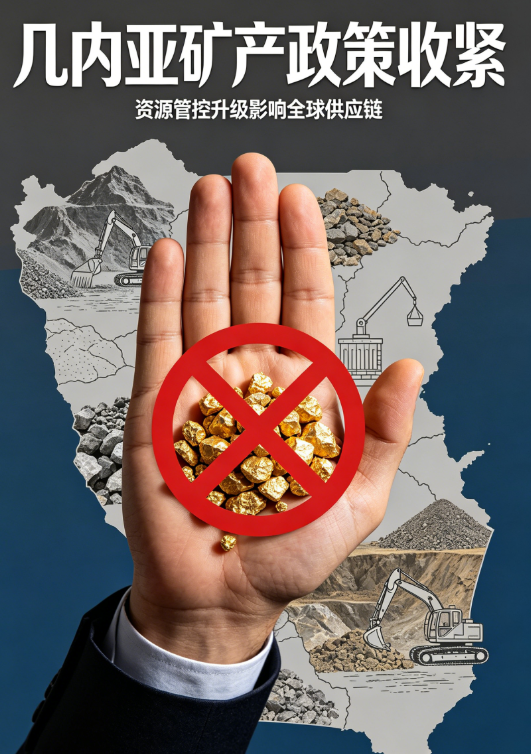
Recently, Guinean President Mamadi Doumbouya announced that Guinea will fully ban raw gold exports, requiring gold to be smelted, certified and processed within the country before it can enter the international market. This policy is not only a major adjustment to Guinea's gold supply chain, but also reflects the country's firm intention to move from a resource-export economy to a local value-added economy. For Guinea, which has long relied on mineral exports for foreign exchange, the measure clearly signals economic transformation and may also affect the broader gold industry landscape in West Africa.
1. From 'raw material outflow' to local processing: the logic behind the policy
When meeting with industrial and artisanal gold producers and gold-buying institutions, Doumbouya said bluntly that Guinea has West Africa's second-largest gold reserves, but for a long time gold was shipped out as ore and processed, certified and sold abroad. In other words, Guinea bore the environmental, governance and social costs of extraction while leaving the added value overseas.
The core goal of the ban is clear: keep the processing stage at home and create more value inside Guinea. Once raw gold exports are halted, gold must first be refined into bullion at a new plant in Conakry before entering the international market. That means Guinea is no longer satisfied with simply 'selling ore'; it wants to take part in gold refining, grading, certification and trading, all of which generate much higher value.
2. Economic transformation: Guinea does not want to remain a 'raw-material transporter'
From a macroeconomic perspective, this move is not isolated. It is a concentrated expression of Guinea's changing resource-governance thinking. For years, although Guinea has been known as the world's largest bauxite producer, gold is also an important pillar of its export structure. According to relevant data, Guinea's non-monetary gold exports in 2024 reached 444,240 billion Guinean francs, or about $5.16 billion, accounting for 48.8% of total exports and up 44.1% year on year. That share even exceeds bauxite's 44.4%.
This shows that gold has become an important source of foreign exchange and fiscal stability. But export growth does not automatically mean industrial upgrading. If large amounts of gold leave as raw ore, the country earns only mining taxes and small export gains, while the real profits from processing, branding and international trade go to foreign firms. So restricting raw gold exports is essentially Guinea's way of seeking resource sovereignty and greater control over the value chain.
3. Policy execution faces real challenges
Although the direction is clear, the policy will face several tests before it truly works. First, whether Guinea's local gold-processing capacity is enough to support implementation remains a key question. Smelting, certification and standardized processing require strong technology, equipment and regulatory capacity. If infrastructure and industrial support are weak, the ban could hurt export efficiency in the short run and even encourage underground trade and smuggling.
Second, Guinea's gold miners are highly fragmented. They include large industrial companies, semi-industrial operators and a huge number of artisanal miners. For these players, production scale, compliance ability and bargaining power vary greatly. If the regulatory system does not improve at the same time, implementation may become uneven, costs may rise, and gray-market flows may increase.
In addition, the international market will react to the change. Limits on raw gold exports will alter supply-chain arrangements for some traders and buyers, and may temporarily affect the pace of Guinea's gold exports. But in the long run, if a local refining system is established successfully, Guinea could enter the global gold market in a more standardized and transparent way.
4. From gold to bauxite: resource policy may tighten across the board
It is worth noting that Guinea's move on gold is not an isolated event. Just last month, the government signaled plans to formally introduce bauxite export controls in June. That suggests Guinea is systematically reshaping resource-export policy and trying to move away from the old path of simply shipping out raw materials.
For a country rich in minerals but relatively weak in industrial foundations, export controls are not just 'restrictions'; they are part of industrial restructuring. The core goal is to use institutional measures to promote local processing, extend the value chain, raise tax contributions and gradually build mining-related manufacturing, logistics, finance and testing services. If this path goes smoothly, Guinea could move from a resource exporter to a resource processor, and eventually toward a regional mining hub.
Conclusion
Guinea's ban on raw gold exports may look like a change in gold-trade rules, but in substance it is a redefinition of how resource benefits are distributed. It shows the government's desire to break away from the old model of 'selling resources for low profit' and instead raise gold's added value through local processing, strengthening the economy's resilience.
Of course, whether the policy can truly turn into growth momentum depends on processing capacity, regulatory enforcement and industrial support. If Guinea uses this opportunity to improve its refining system, strengthen mining governance and extend the policy to more minerals, the raw gold export ban could become an important starting point for its resource-based economic transformation.