In-depth Analysis of Gold and Silver Spot and Futures Markets: The Rise of Asian Pricing Power in 2026 and Trading Strategy Restructuring
\nIn the third quarter of 2026, the global precious metals market underwent profound changes, with gold and silver spot and futures markets presenting an unprecedented new landscape. As the Asian region continued its economic recovery and geopolitical risks intensified, gold and silver price volatility increased significantly, leading to fundamental shifts in trading strategies. This article will conduct an in-depth analysis of the core driving factors in the current gold and silver spot and futures markets, explore how rising Asian demand is reshaping global pricing mechanisms, and provide investors with trading strategies based on the new market landscape.
\n\nThe 2026 Gold and Silver Market Panorama: A New Era Dominated by Asian Demand
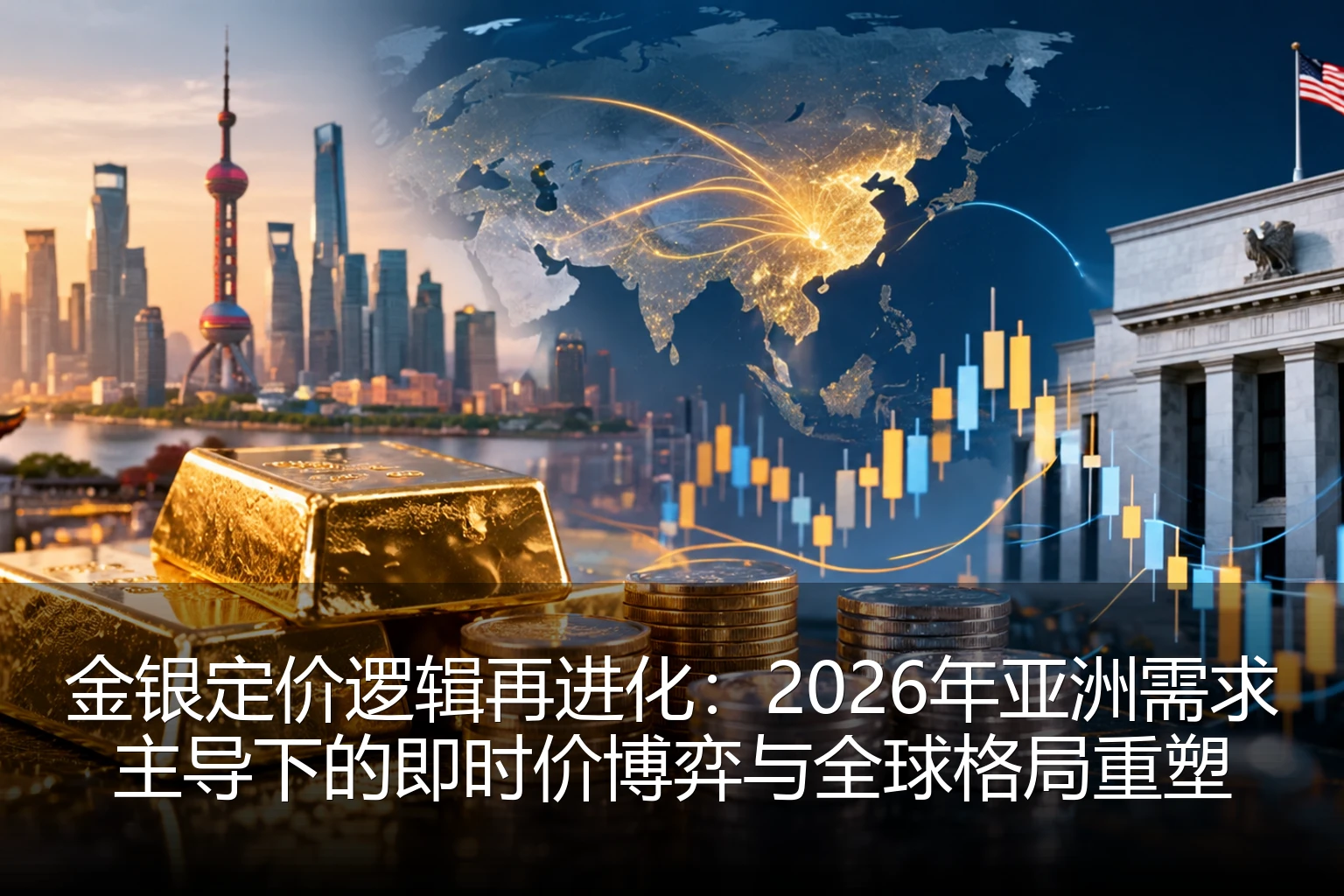
\nThe gold and silver market in 2026 exhibited clear regional differentiation characteristics. According to the latest market data, the proportion of gold and silver demand in Asia has exceeded 65%, reaching a historic high. This change has directly altered the global pricing logic for gold and silver, making the Asian market a key factor influencing global precious metal prices.
\n\nIn the spot market, Asian gold and silver premiums continued to expand, particularly with strong physical demand in China and India, the two largest consumer countries. The trading volume of gold and silver on the Shanghai Gold Exchange (SGE) increased by 23% compared to the same period last year, while the trading volume of gold and silver contracts on the Multi Commodity Exchange of India (MCX) increased by 35%. This regional demand growth has significantly enhanced the influence of Asian spot prices on the global market.
\n\nIn the futures market, the trading volume and open interest of gold and silver futures contracts on Asian exchanges both reached historic highs. The average daily trading volume of gold futures on the Shanghai Futures Exchange (SHFE) exceeded 1 million lots, and the trading volume of gold and silver contracts on the Shanghai International Energy Exchange (INE) also showed a rapid growth trend. In contrast, the proportion of COMEX trading volume, which traditionally dominated global gold and silver pricing, has decreased from 65% five years ago to 48% currently, indicating that pricing power is shifting to Asia.
\n\nThe Rise of Asian Demand: A Key Force Reshaping Gold and Silver Pricing Logic
\nThe rise in Asian gold and silver demand is not accidental but the result of multiple factors working together. First, the Asian economy continues to grow, particularly as the middle class expands in China, India, and Southeast Asian countries, driving steady growth in demand for gold and silver jewelry and investment products. Data shows that in 2026, jewelry demand for gold in Asia increased by 18% year-on-year, while investment demand for gold increased by 22%.
\n\nSecond, central banks in various Asian countries continue to increase their gold reserves, becoming an important factor driving the market. In the first three quarters of 2026, Asian central banks purchased a net 180 tons of gold, accounting for more than 70% of global central bank gold purchases. This official gold purchasing behavior not only increased physical demand but more importantly strengthened Asia\'s voice in global gold and silver pricing.
\n\nThird, the innovative development of financial markets in Asia has provided new momentum for gold and silver trading. Innovative products such as China\'s "Gold Accumulation Plan" and India\'s "Gold Bonds" allow more ordinary investors to conveniently participate in gold and silver investment, further expanding market demand.
\n\nFederal Reserve Policy Shift and the US Dollar Index: Dual Variables Affecting Gold and Silver Prices
\nDespite the rise in Asian demand, Federal Reserve monetary policy remains a key factor affecting gold and silver prices. In the third quarter of 2026, after maintaining high interest rates for nearly two years, the Federal Reserve finally began an interest rate cut cycle, with the first cut of 25 basis points. This policy shift has had a profound impact on the gold and silver market.
\n\nHistorical data shows that gold and silver prices usually have a negative correlation with the US dollar index. However, market performance in 2026 shows this relationship is undergoing subtle changes. After the Federal Reserve\'s interest rate cut, the US dollar index once fell to the 98 level, a three-year low, but the increase in gold and silver prices was less than the historical average. This indicates that under the new landscape dominated by Asian demand, the factors affecting gold and silver prices are becoming more diversified.
\n\nAnalysts point out that the current gold and silver market has entered a "dual-drive" mode: on one hand, Federal Reserve policy affects gold and silver prices through the US dollar index and real interest rates; on the other hand, Asian physical demand and central bank gold purchases directly support gold and silver prices. This dual-drive mechanism makes gold and silver price forecasting more complex, requiring investors to consider multiple factors comprehensively.
\n\nThe Global Central Bank Gold Purchase Surge: The Strategic Layout of Asian Central Banks
\nIn 2026, the global central bank gold purchase surge continued to accelerate, with a net purchase of 350 tons in the first three quarters, a five-year high. Notably, Asian central banks became the absolute main force in this gold purchase wave, contributing more than 70% of the net gold purchases.
\n\nThe People\'s Bank of China continued to expand its gold reserves, reaching 2,200 tons by September 2026, an increase of 120 tons from the beginning of the year. The Reserve Bank of India also accelerated its gold purchase pace, with a net purchase of 45 tons in the first three quarters, a historic high for the same period. Southeast Asian countries such as Thailand, Vietnam, and Malaysia have also increased their gold reserves to respond to geopolitical risks and currency fluctuations.
\n\nBehind the gold purchasing behavior of Asian central banks lie profound strategic considerations. On one hand, these countries hope to reduce their dependence on the US dollar and enhance financial sovereignty by increasing gold reserves; on the other hand, against the backdrop of increasing global geopolitical uncertainty, the value of gold as a safe-haven asset has become more prominent.
\n\nChanges in Asian Gold Mine Supply: A Key Factor Affecting Market Balance
\nChanges on the supply side also affect the balance of the gold and silver market. In 2026, Asian gold mine production showed a differentiated pattern: gold mine production in China, Indonesia, and Kazakhstan increased, while gold mine production in the Philippines and Malaysia decreased due to tightened environmental policies.
\n\nAs Asia\'s largest gold producer, China\'s gold production in the first three quarters of 2026 increased by 5% year-on-year, reaching 320 tons. This growth mainly came from the expansion of gold mines in Inner Mongolia, Gansu, and Xinjiang. However, the improvement of environmental standards has also forced some small gold mines to close, limiting further production growth.
\n\nIn the futures market, changes in hedging strategies by Asian gold mining companies are also worth noting. With the enhancement of Asian pricing power, more and more Asian gold mining companies are conducting hedging operations on local exchanges, reducing their dependence on COMEX. This change further strengthens Asia\'s influence in global gold and silver pricing.
\n\nTrading Strategy Restructuring: An Investment Guide to Adapt to the New Market Landscape
\nFacing the new landscape of the gold and silver market, investors need to adjust their trading strategies to adapt to the market environment dominated by Asian demand. Here are several key strategy recommendations:
\n\n- \n
- Focus on Asian Market Dynamics: Closely monitor trading data from the Shanghai Gold Exchange, Shanghai Futures Exchange, and the Multi Commodity Exchange of India, as these markets have become important factors affecting gold and silver prices. \n
- Seize Regional Price Difference Opportunities: The price differences between Asian and Western markets for gold and silver may provide arbitrage opportunities, and investors can focus on cross-market arbitrage strategies. \n
- Track Central Bank Gold Purchases: Regularly monitor the gold purchase dynamics of Asian central banks, as these official behaviors often indicate medium to long-term price trends. \n
- Hedge Geopolitical Risks: During periods of geopolitical tension, the value of gold and silver as safe-haven assets becomes prominent, and investors can appropriately increase their allocation to precious metals. \n
- Combine Technical Analysis with Fundamentals: In a market dominated by Asian demand, pure technical analysis may not be comprehensive enough and needs to be combined with fundamental analysis, especially supply and demand data from the Asian region. \n
Future Outlook: The Continued Deepening of Asian Pricing Power
\nLooking ahead, Asia\'s influence in global gold and silver pricing is expected to further strengthen. With the continued economic growth and continuous improvement of financial markets in Asia, the gold and silver spot and futures markets will further tilt toward Asia.
\n\nBy 2027, Asia\'s share of gold and silver demand is expected to exceed 70%, and the trading volume of gold and silver futures on Asian exchanges is likely to surpass COMEX. This change will reshape the global gold and silver market landscape, providing more opportunities for Asian investors while also presenting new challenges to traditional market participants.
\n\nFor global investors, understanding and adapting to this change is crucial. By deeply studying Asian market dynamics and grasping the price trends driven by Asian demand, investors can seize investment opportunities in the new market landscape and achieve asset preservation and appreciation.
\n\nConclusion
\nThe gold and silver spot and futures markets in 2026 are undergoing profound changes, with the rise of Asian demand reshaping global pricing mechanisms. Under this new landscape, investors need to re-examine traditional analytical frameworks and trading strategies, paying more attention to the dynamics and influencing factors of the Asian market.
\n\nThe interweaving of multiple factors such as Federal Reserve policy shifts, Asian central bank gold purchase surges, and regional supply and demand changes has made the gold and silver market unprecedentedly complex. Only by deeply understanding these changes can effective strategies adapted to the new market landscape be formulated, achieving success in the precious metals market full of opportunities and challenges.
\nWith the continued deepening of Asian pricing power, the global gold and silver market will enter a more diverse and balanced new era. For investors, this not only means challenges but also contains huge opportunities.