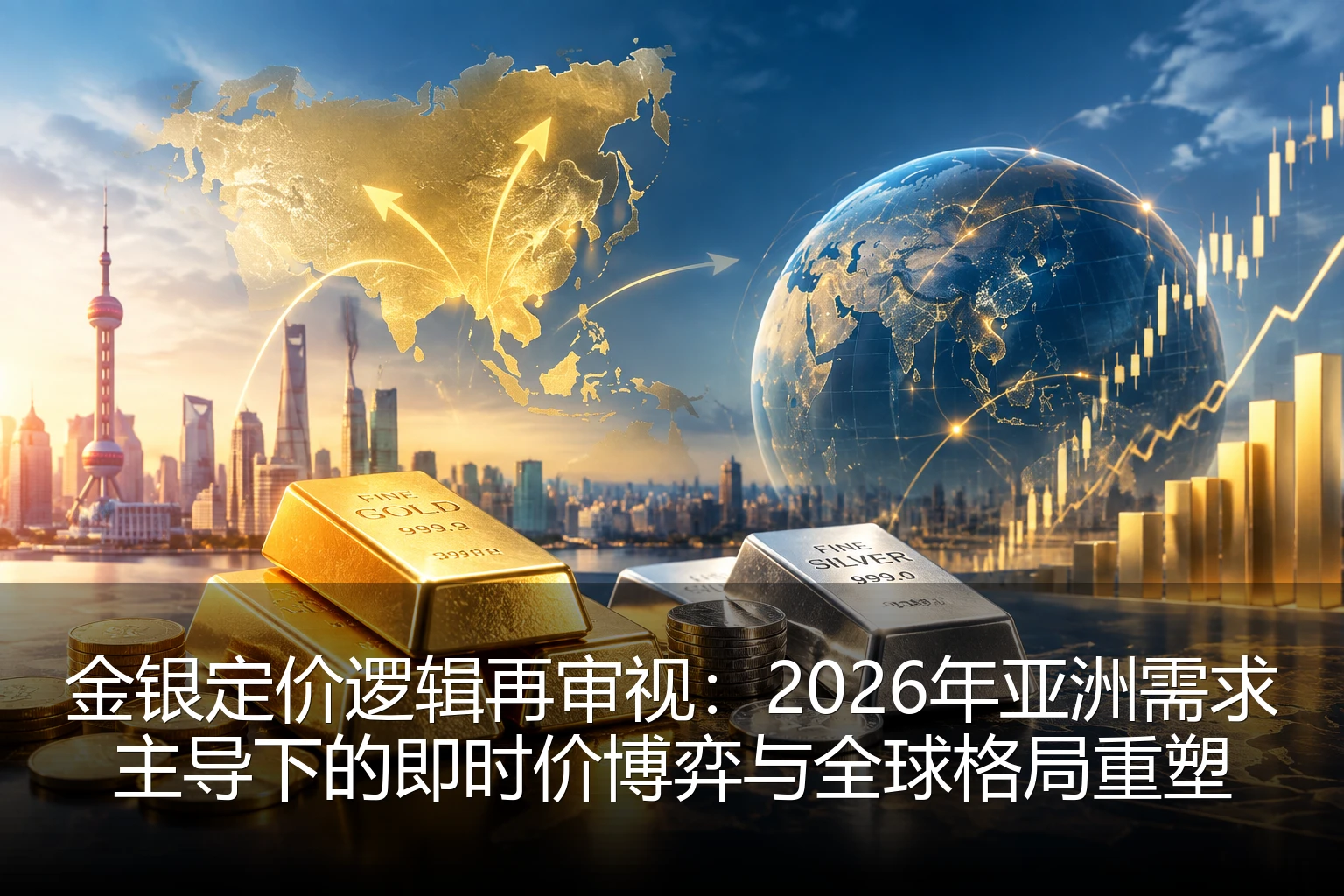
Revisiting Gold and Silver Pricing Logic: Spot Market Dynamics and Global Landscape Reshaping Driven by Asian Demand in 2026
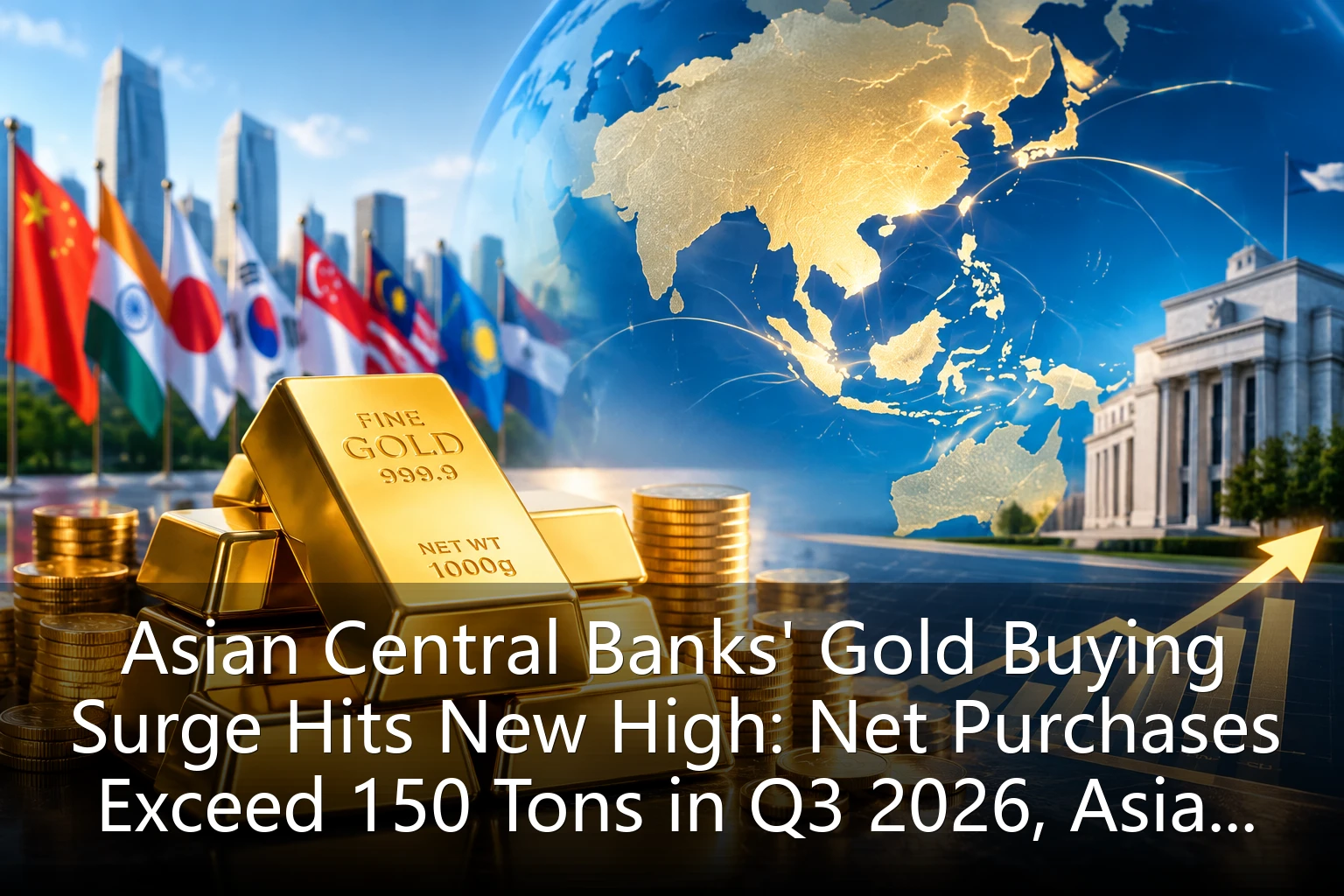
The global precious metals market reached a critical turning point in the third quarter of 2026. Data shows that Asian central banks net-purchased over 150 tons of gold, accounting for 65% of the total gold purchases by central banks globally. This figure set a new high, signaling a shift in Asian demand from being a "follower" to a "price setter." Concurrently, international gold prices fluctuated around $4300/ounce, while silver prices surpassed $25/ounce, causing the gold-silver ratio to drop below 55. The precious metals market is undergoing a redefinition of its pricing logic, driven by Asian demand. This article will deeply analyze the changes in the gold and silver pricing logic from three dimensions: the rise of Asian demand, the transformation of the global landscape, and the spot market dynamics, providing strategic insights for investors.
I. The Rise of Asian Demand: The Transfer of Pricing Power from "Following" to "Leading"
For decades, global gold and silver pricing power was largely dominated by Western markets, with futures prices from COMEX (Commodity Exchange, New York) and spot prices from LBMA (London Bullion Market Association) serving as global benchmarks. However, data from Q3 2026 indicates that Asian demand is gradually altering this pattern. According to the latest report from the World Gold Council (WGC), in the third quarter of 2026, global central banks net-purchased 158 tons of gold, of which Asian central banks contributed 103 tons, representing 65%. This marks the first time Asian central banks have held the absolute majority of global central bank gold purchases. China's central bank has continuously increased its gold holdings for 21 months, purchasing 640,000 ounces (approximately 19.9 tons) in July alone, a 30% increase from the second quarter. South Korea's central bank resumed gold purchases after 13 years, acquiring 104 tons in one go, completing the "final puzzle piece" of Asian central bank purchases. India's central bank, meanwhile, responded to the depreciation of the rupee and inflationary pressures by increasing its gold reserves.
The rise of Asian demand is not limited to central bank purchases but is also evident in physical demand. China is the world's largest gold consumer, with gold jewelry demand increasing by 12% year-on-year in the first half of 2026. During the "Golden September and Silver October" period in the third quarter, jewelry sales rose by 18% month-on-month, mainly benefiting from domestic consumption recovery and festive demand. India, as the second-largest gold consumer, imported 850 tons of gold in the third quarter of 2026, a 15% year-on-year increase, driven primarily by wedding seasons and religious festivals (such as Diwali). Furthermore, investment demand in Asia is growing; for instance, mainland Chinese investors increased their gold holdings through gold ETFs on the Shanghai Gold Exchange, with ETF holdings rising by 8% month-on-month in Q3 2026 to reach 1200 tons.
What makes Asian demand unique is that it focuses not only on price but also on physical delivery and long-term reserves. For example, the main purpose of China's central bank increasing gold holdings is to diversify foreign exchange reserves and reduce reliance on the US dollar. India's central bank increases gold holdings to cope with the depreciation of the rupee and inflation; South Korea's resumption of gold purchases aims to enhance the stability of its foreign exchange reserves. This "strategic demand" gives Asian demand greater resilience, making it less susceptible to short-term price fluctuations, thereby providing long-term support to gold and silver prices.
II. Global Landscape Transformation: The Intertwined Influence of the Federal Reserve's Policies and Geopolitical Hedging
Besides Asian demand, shifts in the global landscape are also a significant factor influencing gold and silver prices. In the third quarter of 2026, the Federal Reserve's monetary policy showed a turning point, with the September meeting minutes indicating that the Fed might cut interest rates 2-3 times within the next six months to address economic slowdown and inflationary pressures. This expectation caused the US Dollar Index to fall below the 98 mark, reaching a three-year low, and the weakening US Dollar Index directly drove up gold and silver prices. Since gold and silver are priced in US Dollars, a depreciation of the dollar lowers the cost of holding these precious metals, thereby attracting more investors to buy.
Geopolitical hedging sentiment is also a key factor affecting gold and silver prices. In the third quarter of 2026, the Middle East situation remained tense, with escalating conflicts between Israel and Hamas causing crude oil prices to exceed $100 per barrel, leading to heightened safe-haven sentiment. Furthermore, the continuation of the Russia-Ukraine conflict kept European energy prices high, further exacerbating global inflationary pressures. These geopolitical events led investors to view gold and silver as "safe-haven assets," prompting purchases and supporting the prices of gold and silver.
However, the changes in the global landscape are not solely positive. For instance, the expectation of a Fed rate cut might be postponed if economic data is better than anticipated, leading the Fed to maintain high interest rates for longer, which would suppress gold and silver prices. Moreover, a calming of the geopolitical situation could lead to a cooling of safe-haven sentiment, thus impacting gold and silver prices. Therefore, investors need to monitor the dynamic changes in these factors to judge the trend of gold and silver prices.
III. Real-time Price Dynamics: The Logic Behind Gold at $4300 and Silver at $25
In the third quarter of 2026, international gold prices fluctuated around $4300 per ounce, while silver prices surpassed $25 per ounce, and the gold-silver ratio fell below 55. This price movement is influenced by the interplay of multiple factors, including Asian demand, Federal Reserve policy, and geopolitical hedging.
Firstly, the support from Asian demand is the core driver of gold price increases. Increased purchases by the central banks of China and South Korea, along with physical demand from India and China, have made the physical demand for gold robust, and increased physical demand tends to push up gold prices. Furthermore, investment demand in Asia is also growing, such as the increase in gold ETF holdings on the Shanghai Gold Exchange, which further supports the gold price.
Secondly, the weakening US Dollar Index is an important factor driving gold price increases. In the third quarter of 2026, the US Dollar Index fell from 100 to 98, a decrease of 2%, which directly pushed up gold prices. Because gold is priced in US Dollars, a depreciation of the dollar lowers the cost of holding gold, thereby attracting more investors to buy.
Thirdly, the rise in geopolitical hedging sentiment is also a driving force behind gold price increases. The tension in the Middle East and the continuation of the Russia-Ukraine conflict have led investors to view gold as a "safe-haven asset," prompting purchases and supporting the gold price.
Regarding silver prices, in addition to hedging demand, industrial demand is also an important factor. In the third quarter of 2026, the global industrial production recovered, especially the demand from the electronics and photovoltaic industries in Asia, which increased the industrial demand for silver. For example, the demand for silver by the photovoltaic industry in China increased by 10% year-on-year, and the demand for silver by the electronics industry in India increased by 8% year-on-year, supporting the rise in silver prices. The breach of the 55 threshold in the gold-silver ratio reflects that silver's industrial demand is stronger than gold's safe-haven demand. Since silver's industrial demand accounts for about 60% and gold's accounts for about 10%, the rise in silver prices tends to exceed the rise in gold prices when industrial demand grows, leading to a decline in the gold-silver ratio. In the third quarter of 2026, the gold-silver ratio fell from 60 to 54, reaching a low since 2023, which demonstrates that silver's industrial demand is becoming a significant factor influencing silver prices.
IV. Investment Strategy: How to seize the gold-silver allocation window dominated by Asian demand
Faced with the changing gold-silver pricing logic, investors need to adjust their strategies to seize the allocation window dominated by Asian demand.
* Physical Gold Allocation: For retail investors, physical gold is an important tool to hedge against inflation and seek safe haven. In the third quarter of 2026, the gold price fluctuated around $4300, which is a relatively reasonable allocation range. It is suggested that investors buy physical gold in installments, such as purchasing 10% of the capital each month, to reduce costs.
* Focus on Asian Gold Mining Stocks: For institutional investors, Asian gold mining stocks are important investment targets. In the third quarter of 2026, the performance of Asian gold mining stocks (such as Zijin Mining in China, Shandong Gold, and Vedanta Resources in India) was good, with net profit growing by 15%-20% year-on-year, mainly benefiting from rising gold prices and cost control. Investors are advised to monitor the performance and holdings of these companies and select targets with growth potential.
* Gold-Silver Ratio Trading Opportunities: The breach of the 55 threshold in the gold-silver ratio provides trading opportunities for investors. If investors believe that silver's industrial demand will continue to grow while gold's safe-haven demand will cool down, they can choose to buy silver and sell gold to gain from the repair of the gold-silver ratio. Conversely, if investors believe that gold's safe-haven demand will continue to grow while silver's industrial demand will slow down, they can choose to buy gold and sell silver.
* Monitoring Federal Reserve Policy Dynamics: The monetary policy of the Federal Reserve is a key factor influencing gold and silver prices. Investors are advised to closely monitor the Federal Reserve's meeting minutes and official speeches to judge changes in interest rate cut expectations. If the Federal Reserve hints at an interest rate cut, gold and silver prices may rise; if the Federal Reserve maintains high interest rates, gold and silver prices may fall.
V. Conclusion: Reshaping the Gold-Silver Pricing Logic Dominated by Asian Demand
In the third quarter of 2026, the global precious metals market is undergoing a reshaping of its pricing logic, dominated by Asian demand. The increased purchases by Asian central banks and the growth in physical demand have made Asian demand the core support for gold and silver prices; while the turning point in Federal Reserve policy and the rise in geopolitical safe-haven sentiment provide short-term momentum for gold and silver prices. In the future, with the continuous growth of Asian demand and further changes in the global landscape, the gold-silver pricing logic will become more tilted towards Asia, and investors need to pay attention to this trend to seize the allocation window.