
Home
Gold & Silver Live Prices
Deep Reshaping of Gold and Silver Pricing Logic: Spot Price Game Amidst Rising Asian Demand and Global Landscape Shifts in 2026
Deep Reshaping of Gold and Silver Pricing Logic: Spot Price Game Amidst Rising Asian Demand and Global Landscape Shifts in 2026
The global precious metals market is undergoing a profound reshaping of its pricing logic in 2026. The sustained gold purchasing spree by Asian central banks resulted in a five-year high in net purchases during Q3 2026, with Asian demand surpassing 65% for the first time, driving a shift in gold pricing power eastward. The Federal Reserve's interest rate policy is reaching a turning point, with the US Dollar Index falling below the 98 mark to a three-year low, accelerating the resetting of the m

This article is for informational purposes only and does not constitute any investment advice. Precious metals trading involves risk, please make decisions carefully.
In 2026, the global precious metals market entered a period of "reshaping" characterized by high variability. The pricing logic of gold and silver is no longer solely dominated by traditional Western markets. The rise of Asian demand, the adjustment of global central bank gold purchasing strategies, the shift in the Federal Reserve's monetary policy, and the intersection of geopolitical and industrial demands are collectively driving the spot prices of gold and silver into a new phase of competition. For investors, understanding this transformation in pricing logic is key to seizing the precious metals allocation window.
I. The Asian Central Bank Gold Buying Wave: The Core Driver of Gold Pricing Power Shifting East
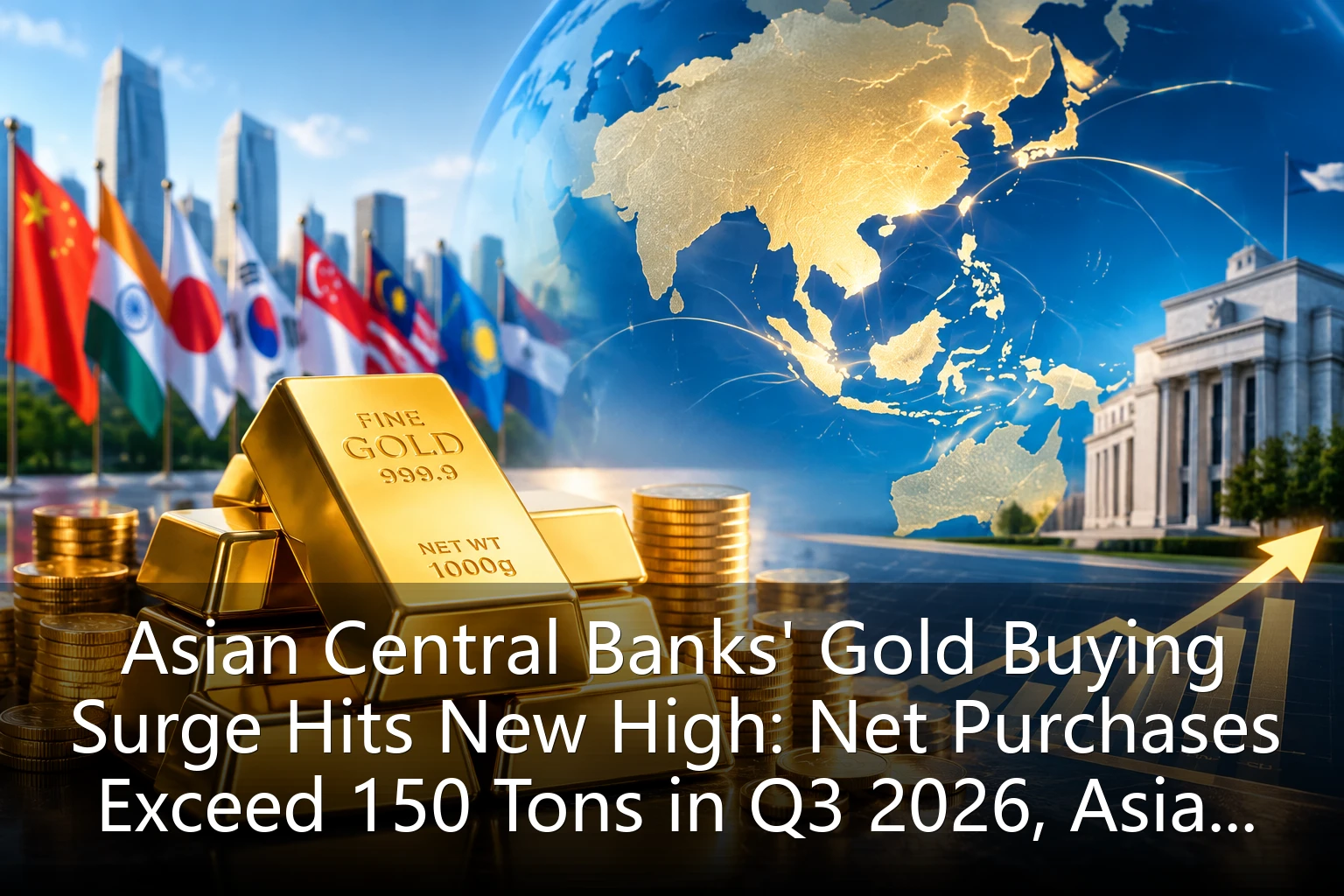
In the third quarter of 2026, the global central bank gold buying wave reached a new high, with net acquisitions totaling 150 tons, setting a quarterly record for the past five years. Asian central banks were particularly prominent, accounting for over 65% of the net increase for the first time, becoming a core force in the strategic transformation of global gold reserves. The People's Bank of China increased its gold holdings for 21 consecutive months, accelerating its single-month acquisition in July to 640,000 ounces. The Bank of Korea, after 13 years, restarted gold purchases, and the "strategic awakening" of its 104 tons of gold reserves is seen as the final piece in the puzzle of Asian central bank gold purchasing. Emerging market central banks, such as those in India and Thailand, also joined the buying spree, continuously boosting the share of Asian demand for gold.
Behind this trend lies the strategic consideration of Asian economies regarding "de-dollarization" and "re-anchoring currencies." As the credibility of the US dollar system weakens, the value of gold as a traditional safe-haven asset is being re-examined. By increasing their gold holdings, Asian central banks not only enhance the stability of their foreign exchange reserves but also secure a more advantageous position in the future international monetary system. This strategic-level demand is altering the supply and demand structure of gold, subsequently influencing its spot price.
In terms of market performance, the Asian gold buying wave directly drove the rise in international gold prices. In September 2026, the international gold price returned to the $4300/ounce level, and Asian gold ETFs absorbed $6 billion over 16 consecutive days, demonstrating the global enthusiasm for acquiring gold. This price increase, driven by Asian demand, contrasts sharply with the speculative fluctuations of traditional Western markets, marking the gradual transfer of gold pricing power eastward.
II. The Federal Reserve's Interest Rate Policy Turning Point: USD Index Volatility and Currency Re-anchoring
In 2026, the Federal Reserve's interest rate policy reached a critical turning point. As US inflation pressures eased, market expectations for interest rate cuts intensified, causing the USD Index to fall below the 98 mark in September, hitting a three-year low. This change has profound implications for gold and silver pricing: on one hand, the weakening dollar reduces the cost of gold priced in USD, attracting more non-US investors to the market; on the other hand, the expectation of rate cuts lowers the opportunity cost of holding gold, further enhancing gold's attractiveness.
At the September 2026 monetary policy meeting, the Fed Chair signaled a "gradual reduction in interest rates," emphasizing that "policy will be adjusted flexibly based on economic data." This statement led to divergence in market views on the future trajectory of the dollar, and the correlation between the spot price of gold—a tool to hedge against dollar depreciation—and the USD Index has significantly strengthened. Data shows that in the third quarter of 2026, the correlation coefficient between the USD Index and gold prices reached -0.75, a high for the past five years. Furthermore, the Federal Reserve's balance sheet policy is also worth noting. In 2026, the Fed began to gradually reduce the scale of quantitative easing, but the market generally expects the pace of this balance sheet reduction to be slower than anticipated. This "slow reduction" policy has kept US dollar liquidity relatively abundant, further supporting the demand for gold allocation. For investors, monitoring the Fed's interest rate decisions and balance sheet changes is a crucial basis for judging the trend of the spot prices of gold and silver.
III. Geopolitical Hedging and Industrial Demand: Reshaping the Gold-Silver Ratio Logic
The gold-silver ratio is an important indicator in the precious metals market, and this indicator showed significant changes in 2026. As of September 29, the gold-silver ratio fell below the 55 threshold, hitting a near-ten-year low. This change is the result of the combined effect of a boom in silver industrial demand and rising geopolitical hedging sentiment.
Silver's industrial demand continued to grow in 2026, with a significant increase in applications in new energy fields such as photovoltaics and electric vehicles. According to data from the World Silver Institute, global silver industrial demand grew by 8% in 2026, with the Asian region contributing 60% of this growth. This growth in industrial demand has shifted the supply and demand structure of silver from being "finance-dominated" to having dual attributes of "finance + industry," which in turn has driven its price up relative to gold, leading to a decline in the gold-silver ratio.
At the same time, geopolitical risks have intensified. Tensions in the Middle East and the ongoing Russia-Ukraine conflict have heightened market hedging sentiment. Gold, as a traditional safe-haven asset, has seen its price supported; while silver's industrial nature makes it relatively weaker in hedging sentiment, the growth in industrial demand is gradually changing its price trend in the long run. The gold-silver ratio logic driven by this dual force is reshaping investors' allocation strategies for precious metals.
In terms of institutional holdings, hedge funds significantly increased their long positions in silver futures in the third quarter of 2026, reaching a historical high in net long positions. This change in holdings reflects the market's optimistic expectations for silver industrial demand and the need for diversified allocation amid geopolitical hedging sentiment. For individual investors, monitoring changes in the gold-silver ratio can better seize the timing for silver allocation.
IV. Spot Price Dynamics: The Interplay of Institutional Holdings and Market Sentiment
In 2026, the volatility of gold and silver spot prices increased, and the interplay between institutional holdings and market sentiment became a key factor influencing prices. On one hand, changes in holdings by large institutional investors (such as hedge funds and sovereign wealth funds) directly reflect their judgment of the precious metals market; on the other hand, the sentiment fluctuations of retail investors (such as the subscription and redemption of gold ETFs and the discussion heat on social media) also influence the spot price to some extent.
Data shows that in the third quarter of 2026, hedge funds increased their net long positions in gold futures by 25%, while net long positions in silver futures increased by 40%. This difference reflects the differentiated allocation by institutions between gold's hedging attributes and silver's industrial attributes. At the same time, Asian gold ETFs continuously absorbed $6 billion for 16 consecutive days, indicating sustained demand for gold from retail investors; while the subscription of silver ETFs was relatively moderate, reflecting a cautious optimism in the market regarding silver industrial demand. In terms of market sentiment, social media shows a contrast between the "gold boom" and the "silver slump." After gold prices returned to $4300, discussions about the "opening of gold allocation windows" reached a peak; however, silver's discussion volume was relatively lower due to uncertainty in industrial demand. This emotional divergence causes a split in the fluctuations of gold and silver spot prices: gold remains strong, driven by safe-haven sentiment, while silver oscillates amid the interplay between industrial demand and safe-haven concerns.
For investors, understanding the intersection of institutional holdings and market sentiment helps predict the short-term trend of gold and silver spot prices. For example, when hedge funds significantly increase their holdings of silver futures, while retail investors reach a peak in subscriptions for gold ETFs, it may signal that the market is about to enter a correction phase, requiring cautious allocation.
V. Investor Allocation Strategies: Grasping the "New Normal" of the Gold and Silver Market
Faced with the reshaping of the gold and silver pricing logic in 2026, investors must adjust traditional allocation strategies to adapt to the market's "new normal." First, pay attention to the gold purchasing dynamics of Asian central banks, especially the actions of emerging market central banks like those in China and South Korea, as these actions often foreshadow the long-term trend of gold prices. Second, closely track the interest rate policies of the Federal Reserve and the movement of the US Dollar Index, as the strength or weakness of the dollar directly affects the spot prices of gold and silver. Third, pay attention to changes in silver's industrial demand, particularly the growth in demand from sectors like photovoltaics and electric vehicles, which will be a major support for silver prices. Finally, monitor the intersection of institutional holdings and market sentiment to avoid chasing highs at emotional peaks or selling off at emotional troughs.
Specifically, for gold investors, a "buy on dips + long-term holding" strategy can be adopted. Gradually increase gold allocation when the US Dollar Index weakens and expectations of an interest rate cut by the Federal Reserve rise. For silver investors, a "strategic buying on dips + swing trading" strategy can be used, focusing on the balance between industrial demand and geopolitical safe-haven sentiment—buying when silver prices correct and selling when industrial demand is released.
Furthermore, investors can diversify risks through gold and silver ETFs or mining ADRs. For instance, the performance divergence of Asian gold mining stocks listed in the US (such as Senda Resources or Zijin Mining) in the second half of 2026 is increasing, but institutional holding signals indicate that some high-quality mining stocks still hold allocation value. By investing in these stocks, one can both share in the gains from rising gold prices and benefit from the earnings growth of mining companies.
In summary, the pricing logic of the global precious metals market is undergoing profound changes in 2026. The rise of Asian demand, the shift in Federal Reserve policy, and the interplay between geopolitical safe-haven concerns and industrial demand are collectively driving gold and silver spot prices into a new phase of competition. For investors, understanding these changes and adjusting allocation strategies is key to seizing opportunities and achieving capital appreciation in the precious metals market.
Article tags
Related Articles Recommended