Please find below the professional formal article created according to your requirements.
Inflation Data Cools Broadly, Gold Regains Buying Support: Market Analysis Under Monetary Policy Expectation Rebuilding
Keywords: US Inflation, Gold, Fed, Monetary Policy, Spot Gold, Dollar Index
Introduction: A Turning Point in Macro Sentiment
On the highly sensitive nerves of global financial markets, US inflation data has always been the core variable affecting asset price directions. The latest data released on Tuesday evening Beijing time showed that US inflation indicators for June cooled broadly and exceeded expectations. This key signal, like a timely rain in the hot summer, quickly eased market anxiety about sustained high price pressures and triggered a major adjustment in asset pricing logic.
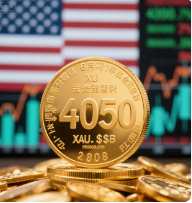
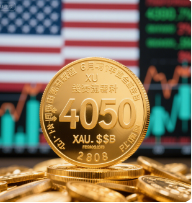
Gold, the traditional non-yielding safe-haven asset, became one of the most direct beneficiaries of this macro sentiment shift. During Asian trading on Wednesday following the data release, spot gold (XAU/USD) prices rebounded from the previous pressured area, stabilizing near the key psychological level of $4,050/oz. Behind this rebound is not a single technical factor, but the corresponding drop in the dollar index, the reshaping of market expectations for the Fed's aggressive rate hike path, and the resultant reshuffling of global capital flows.
This article aims to deeply analyze the macro background of this US inflation cooling, interpret its specific impact on the gold market, and explore the potential logic of gold's future path under the subtle changes in Fed monetary policy expectations.
1. Data Cooling: Comprehensive Interpretation of US June Inflation
1.1 Core Data: More-than-Expected Decline
The latest US June Consumer Price Index (CPI) report showed that both headline and core CPI year-over-year and month-over-month growth rates were significantly below market expectations. Specifically, the headline CPI annual rate fell to 3.0%, the lowest since 2024; the core CPI annual rate fell to 4.8%, also showing a clear downward trajectory. The slowdown in month-over-month growth, especially the cooling of service-sector inflation considered more resilient, excited the market.
The significance of this data is that it breaks the widespread market concern about "inflation stickiness." In recent months, despite the Fed maintaining high rates, the resilience of the labor market and consumer spending made the pace of inflation decline bumpy. June's data clearly shows that the cumulative effects of previous tightening policies are beginning to transmit more fully to the real economy, and price pressures are shifting from "slowing from highs" to "broad-based cooling."
1.2 Component Analysis: Rents and Used Cars as Key Drivers
In terms of composition, the driving force behind this inflation cooling comes from two main areas. First is housing costs, the largest component in the CPI basket. Although the market generally expects lagged effects of rents to remain high for a while, the month-over-month growth rates for primary residence rent and owners' equivalent rent both showed moderate slowing in June, suggesting that the peak in this area may have passed. Second, used car and truck prices fell significantly, consistent with the continued weakening of leading indicators like the Manheim Used Vehicle Value Index, reflecting further supply chain normalization and cooling durable goods demand from consumers under high rates.
1.3 Signal Significance: Dawning Victory, Not the End
It must be pointed out that although the 3.0% figure is still far from the Fed's 2% long-term target, it marks a decisive interim achievement in the fight against inflation. The market interprets this as a strong signal that the Fed no longer needs to sacrifice economic growth for more aggressive rate hikes. This directly led to a rapid convergence of expectations for further rate hikes before year-end, triggering a sell-off in the dollar.
2. Gold's "Golden Hour": Dollar Decline and Rate Expectation Rebuilding
2.1 Inverse Game Between Dollar Index and Gold
In gold pricing, the dollar acts as a "pricing anchor." A weaker dollar directly reduces the cost of buying gold for holders of other currencies, thereby providing demand-side support. The broad inflation cooling weakened the yield advantage of dollar assets. Previously, the Fed's more hawkish stance relative to other major central banks was a main force supporting the dollar's strength. When the market began to expect the Fed's hawkish journey near its end, dollar bulls quickly took profits, causing the dollar index (DXY) to slide notably from three-month highs.

2.2 Decline in Real Interest Rates: Revaluation of Gold
Besides the dollar factor, real interest rates (nominal rates minus inflation expectations) are another core variable determining gold's intrinsic value. As a non-yielding asset, gold's opportunity cost is negatively correlated with real rates. When inflation expectations decline rapidly while nominal rates have not yet fallen in sync, real rates tend to rise temporarily, which is usually unfavorable for gold. However, this time the market reaction was different.
The reason is that this inflation data triggered not only an adjustment in inflation expectations but also a reassessment of the Fed's terminal rate. The market is no longer focused on the specific magnitude of the next one or two rate hikes, but is starting to price forward-looking expectations that the timing of rate cuts may be brought forward once inflation is under control. This shift in expectations caused the market to start trading the "peak" of rates rather than the "pace." Therefore, investors began to bet on a long-term downward trend in nominal rates, thus lowering long-end real rates and creating a favorable valuation environment for gold.
2.3 Return of Safe-Haven Demand: From "Tightening Fear" to "Recession Expectations"
As inflation declines, the market's trading theme is undergoing a subtle switch. Previously, the core contradiction was whether inflation would spiral out of control and whether the Fed would raise rates aggressively. Now, with inflation pressures easing, market concerns are gradually shifting to the lagged impact of high rates on economic activity, i.e., the risk of a "hard landing" or "recession."
Under this backdrop, gold's safe-haven attributes are again highlighted. It is no longer just an anti-inflation tool, but a hedge against economic downside risks. Investors are reallocating to gold as a "stabilizer" in their portfolios to cope with possible credit tightening, falling corporate earnings, and geopolitical uncertainties.
3. Market Reaction and Positive Signals for Investor Strategy
3.1 Capital Flow Shift
The rebound in spot gold prices during Asian trading on Wednesday can be seen as another attempt by global capital to move from "cash is king" to "asset allocation." Funds that had previously flowed into money market funds and short-term Treasuries due to high rates are seeking new outlets. Gold, as a physical asset not dependent on credit entities, has gained favor from passive ETFs (exchange-traded funds) and actively managed funds during the global risk reassessment process.
3.2 Technical Breakout Significance
From a technical analysis perspective, spot gold's return to $4,050/oz is no coincidence. This level is not only a previous dense trading zone (core area of chip distribution) but also a support level at the 200-day moving average (MA200) and an important psychological level. Combined with the major fundamental catalyst, this rebound is more likely a long-term directional choice by the market rather than short-term noise. If gold can effectively hold this level for the remainder of the week, it could lay a solid foundation for challenging $4,100 and even higher.
3.3 Beware of Short-Term Volatility
Although the macro logic has turned favorable for gold, investors still need to maintain some caution. First, US consumption data remains resilient; if subsequent retail sales or employment data are surprisingly strong, it could temporarily dampen market expectations for a Fed pivot. Second, other major central banks (like the ECB and BOE) are still tightening, so even if the dollar index retreats, it is unlikely to collapse in a straight line. Gold's rise is more likely to be a volatile climb with steps forward and back.
Conclusion: New Soil, New Logic
The broad cooling of June inflation data injected strong upward momentum into the gold market. It marks a fundamental shift in the macro environment that has troubled the market for a year: we are transitioning from a "rate-dominated" market to a market "pricing growth and risk appetite." For gold, the worst period—the triple pressure of "high inflation, aggressive rate hikes, strong dollar"—is over.
At this juncture, gold's upward logic becomes clearer: expectations of low real rates, a weak dollar cycle, and safe-haven hedging against potential recession. This is not just an instant reaction to a single data point, but potentially the prelude to a new long-term uptrend. Investors need to adapt to this macro logic shift and reassess gold's strategic position in asset allocation. Future market volatility will depend more on the extent of a US soft landing and the Fed's policy balancing act between inflation and growth.
For long-term gold holders, the oscillation near $4,050 may be the starting point to bid farewell to the old macro gloom and embrace a new narrative stage.