
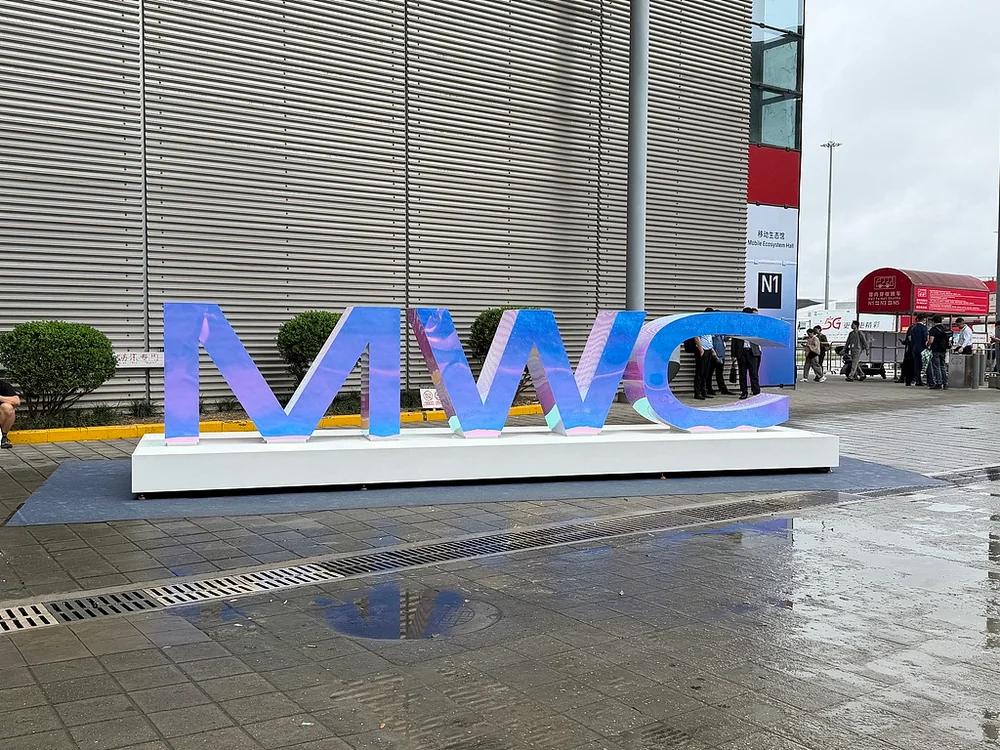
Blue Whale News, June 27 (Reporter Zhai Zhichao) - The 2026 MWC Shanghai opened as scheduled recently. Unlike last year's upbeat atmosphere, when 5G-A commercial orders landed in quick succession, this year's venue had a more cautious pragmatism. The newly standalone 6G industrial ecosystem zone and the "Future Constellation" satellite zone were both busy, but the industry was more interested in asking when technology could turn into real money.
In 6G, the three paths of integrated sensing and communication, AI-native and space-air-ground integration are no longer in dispute, and chipmakers have even started pre-research and inventory planning early. In satellite internet, the land grab for orbits and spectrum is basically over, and large-scale network deployment and cost reduction have become the new theme. Yet consensus stops at the technical layer: terminal makers and investors are largely staying on the sidelines, with the former waiting for killer apps and the latter unable to calculate the payback period. Even international satellite players that are already profitable are struggling with the early cultivation of the consumer market.
As the financial accounts of 5G investment have not yet been fully settled, 6G and satellite internet are collectively entering a transition period of "clear vision, difficult monetization." The technical routes are getting narrower, while the commercial path looks broader and broader. Under real-world constraints on investment returns, the industry needs a more practical answer than a grand narrative.
6G technical paths are converging, but the commercial loop is still being explored
Walking into the 6G industrial ecosystem area in Hall N3 at MWC Shanghai, the five sections - the Beijing 6G Lab overall zone, communications enhancement, integrated sensing and communication, communication-computing-intelligence integration, and space-ground integration - break down the core 6G vision into something clear and tangible. Staff on site told Blue Whale Technology that this is the first time in MWC Shanghai's history that a hall has been dedicated to 6G, and the industry signal is very clear: 6G has moved from concept discussion into a key stage of system validation.

"If last year people were still arguing about what 6G should do, this year the debate is how to do it and what trade-offs to make," a technical staff member from the Beijing 6G Lab overall zone told reporters. At present, the three enhancement paths of integrated sensing and communication, AI-native and space-air-ground integration have basically formed an industry consensus, while key technologies such as terahertz communication and intelligent metasurfaces have also entered prototype validation.
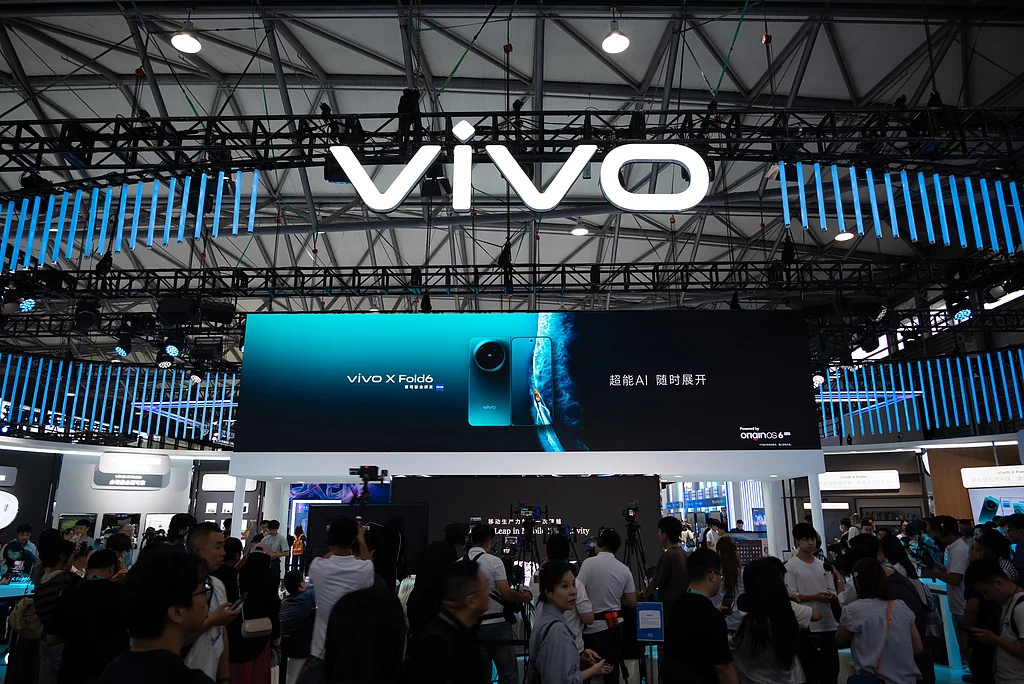
The upstream supply-chain rollout is clearly accelerating. At this exhibition, Qualcomm displayed an end-to-end 6G prototype system, GalaxySpace publicly showed its in-house second-generation direct-to-phone phased-array antenna for the first time in the 6G ecosystem zone, and vivo displayed its 6G pre-research prototype and technical roadmap. It is understood that unlike Xiaomi, which focuses on underlying transmission algorithms, and OPPO, which focuses on communication paradigm innovation, vivo's display direction leans more toward end-to-end systems and application rollout. Its complete 6G test system covers the full chain, including MR terminals, 6G terminal prototypes (UE), 6G base stations (RAN) and the core network.
A local manager from a domestic chipmaker told reporters that the company's internal 6G pre-research team is twice the size it was last year, and the logic is clear: "If we wait until the standard is frozen to start, it'll be too late. We have to build the technology reserve in advance."
However, compared with the enthusiasm upstream, terminal makers are relatively cautious. Blue Whale Technology asked several phone brands about their 6G terminal plans in the 6G zone, and most replies were that they were "closely watching" the space, with very few consumer-grade 6G demos on display. In an informal exchange, a 6G pre-research director from a top-five global smartphone vendor by shipments said it is still hard to provide a clear commercial roadmap for 6G phones. The main reason is not insufficient technical capability, but that the conversion path from terminal-side needs and application scenarios is still under evaluation. In his view, the experience dividend of 5G has not yet been fully released, and immersive holographic and multi-sensory scenarios imagined for 6G are still some distance from mass consumer markets.
The investment community is equally cautious. During the exhibition, Blue Whale Technology met an early-stage investor focused on TMT who had visited several demos in the 6G zone. He said the technical direction is impressive, but from an investment perspective, the capital returns on 5G are still being digested, while the R&D and network-deployment costs of 6G are enormous. Exit timelines and return expectations currently lack enough data support. He admitted that for now he is mostly watching and tracking, and the right time to act still needs clearer commercial signals.
"Future Constellation": large-scale deployment and cost control become the new theme
Unlike the 6G zone, which focused on validating key technologies, the newly launched "Future Constellation" satellite industry zone showed a different industry rhythm: the orbital pattern has begun to take shape, and participants are entering a phase of fine-grained work on resources and costs.
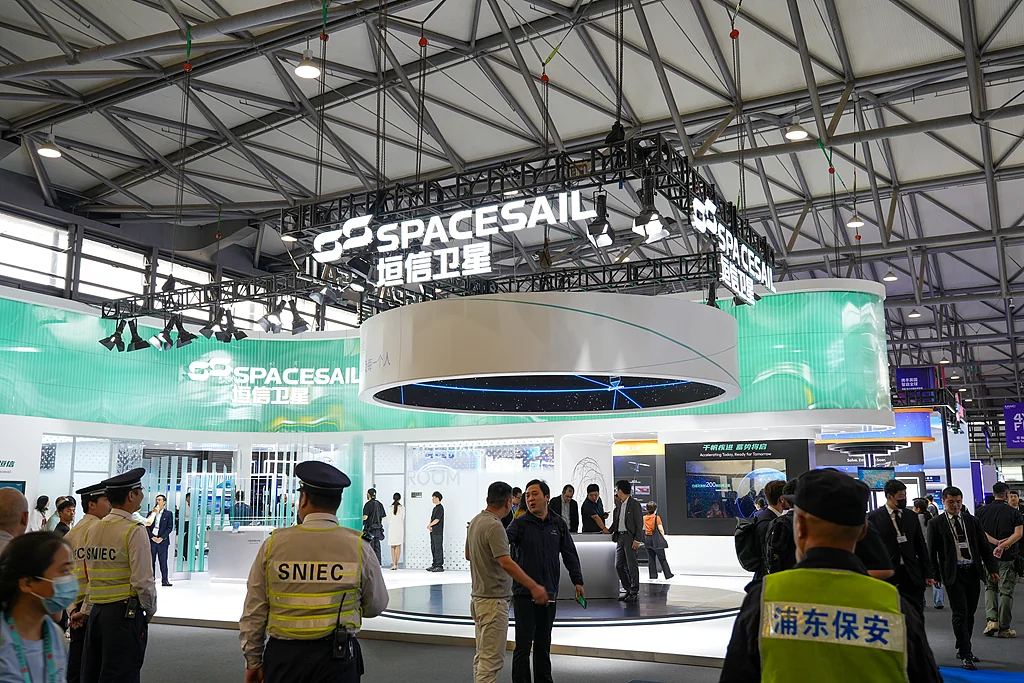
Domestic low-orbit broadband and narrowband constellation operators such as Geespace, China Telecom Satellite, and Spacesail, along with international players like Iridium, all built sizable booths. Geespace showed real low-orbit satellite internet terminal devices for scenarios such as ocean-going ships and desert mining areas; China Telecom Satellite focused on rollout cases for the Tiantong constellation in the IoT field; and engineers from Spacesail even connected live on site to play a video-call test based on the "Thousand Sails" constellation.
"The struggle over orbital and spectrum resources for satellite internet is basically over; the key now is large-scale deployment and cost control," said a staff member from China Telecom Satellite on site. He added that the batch-production cost of the company's narrowband communication payloads is continuing to fall, but also noted that the user scale for satellite internet services has not yet reached breakeven. At least for the next few years, government and industry orders will remain the basic pillar supporting revenue.
In the process of forming a profitability model, terminal cost is a link worth watching. Blue Whale Technology spoke with antenna and module vendors at their booths about the material cost of satellite communication terminals. Interviewees generally said costs are falling rapidly and have become capable of being integrated into mainstream device designs, but most vendors did not disclose specific numbers.
An Iridium business manager told reporters that Iridium relies on narrowband voice and low-speed data services and has already achieved positive cash flow, but traditional market space is approaching saturation. The next round of growth will need to expand into IoT and emergency communications. By contrast, domestic low-orbit broadband constellations are still in a catch-up phase that prioritizes scale, and reaching breakeven will require time and user accumulation.