U.S.-Iran temporary peace accord lifts safe-haven sentiment and gold rebounds strongly amid volatility
Keywords: spot gold, U.S.-Iran peace accord, Federal Reserve, rate expectations, US dollar trend, safe-haven assets, precious metals market
Introduction
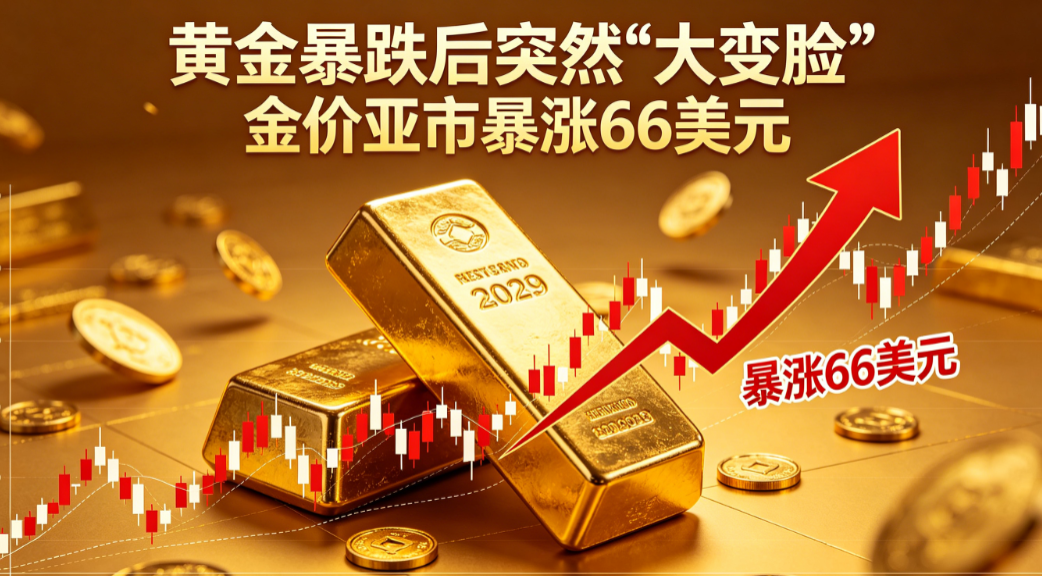
On Thursday morning in Asia, spot gold surged sharply, at one point rising 1.7% to around $4,328 per ounce, with an intraday gain of as much as $66, quickly recovering part of the previous session's losses. Although the Fed's latest comments still suggest monetary policy may remain tight this year, news that the United States and Iran signed a temporary peace accord significantly improved market sentiment and became a major driver of the rebound. Gold swung violently between 'rate pressure' and 'easing geopolitical risk', once again underscoring its sensitivity as a globally priced asset.
U.S.-Iran accord eases market tension
According to market reports, the United States and Iran signed a temporary peace accord electronically on Wednesday night. The deal is widely seen as an important signal that regional conflict and energy-supply stress may ease. Its conclusion suggests that inflation worries that had intensified as tensions worsened could cool for now, and the shock to global energy markets may also fade.
Still, markets have not turned fully optimistic. Two key questions remain unresolved: how long it will take fuel prices to fall meaningfully, and when shipping through the Strait of Hormuz can return to pre-war normal. As a vital corridor for global energy transport, traffic conditions in the strait directly affect crude oil and natural gas prices, and will then feed into inflation expectations and the policy path. So although the accord sends a positive signal, its real impact still needs to be observed.
Fed stance versus gold prices
In sharp contrast to the easing in geopolitical tensions, the Fed's latest meeting still delivered a cautious message. On Wednesday, the Fed left rates unchanged and said it remained committed to price stability, while removing wording about further rate hikes from its statement. Markets interpreted this as a modest shift in stance, but not a full reversal of tightening expectations.
Traders have already fully priced in tightening through at least October. For gold, higher rates usually mean higher carrying costs because gold itself yields no interest. When the market expects rates to keep rising, the dollar often strengthens as well, further weighing on gold. Wednesday's drop of $73.39, or 1.7%, was a clear example of that logic.
Some analysts noted that expectations for Fed tightening were largely priced in before the decision, so the short-term move in gold was driven more by the mix of policy wording and external events. In other words, gold is not being driven by a single variable; it is now searching for a new balance among macro policy, geopolitics and asset-allocation demand.
Institutional allocation demand provides longer-term support
Despite choppy short-term moves, gold's longer-term allocation logic has not weakened. The latest World Gold Council survey showed a record 45% of reserve managers expect to increase gold holdings over the next 12 months. That is a significant signal: with global economic uncertainty still high, debt levels rising and monetary policy diverging, gold remains an important asset for reserve managers and large investors worldwide.
From an asset-allocation perspective, gold combines inflation protection, safe-haven characteristics and portfolio diversification. When real rates, the dollar or geopolitical risks change, funds often rotate quickly between gold and other assets. Gold's sharp rebound between the U.S.-Iran accord and the Fed's policy signal is a textbook example of that behavior.
Other precious metals also rebound
Beyond gold, silver, platinum and palladium also moved higher in Thursday's Asian session. Silver rose 1.2% to $68.75/oz after having dropped 3% the previous day. Platinum and palladium also rebounded, showing that the precious-metals complex was supported by a modest recovery in risk appetite. Meanwhile, the Bloomberg dollar spot index fell 0.1%, giving dollar-priced precious metals some additional support.
Conclusion
Overall, the gold market is at a critical stage where multiple forces are colliding. On one hand, the temporary U.S.-Iran peace accord eased some geopolitical tension and cooled worries about energy supply and inflation. On the other hand, the Fed has not fully shifted to easing, and expectations for rates to stay elevated continue to pressure gold. In the short term, gold is likely to remain highly volatile, caught between safe-haven buying, the dollar trend and policy expectations.
Over a longer horizon, rising central-bank appetite for gold shows that institutional demand for strategic allocation is still strengthening. If geopolitical risks heat up again, or if economic data weakens the Fed's room to tighten further, gold could gain fresh upside momentum. For investors, understanding the link between policy and risk events may be the key to navigating the pace of the precious-metals market.